Day 9. Someone has peeled you a plate of watermelon, it is 34 degrees outside, and your mother-in-law walks in and takes it away without a word. You know that look. Cold fruit. Aiyo.
What "cold" actually means here
In traditional Chinese food therapy, every food has a nature: cooling (寒 or 凉), neutral, warming (温), or heaty (热). The word describes how the food is believed to act on your body, not its temperature on the plate. A warm slice of watermelon is still "cooling". A cold glass of longan tea is still "warming".
The old logic goes like this. After birth you have lost blood and energy, and 月子 is about rebuilding warmth. Cooling foods are thought to slow that down, and may leave you with "wind" or achy joints later. That is the belief. It is not proven. But it has shaped confinement menus for generations, and it is the reason your family is watching your fruit bowl.
Which fruits usually get a pass
Most confinement kitchens, at home or in a centre, treat these as safe to eat in small amounts:
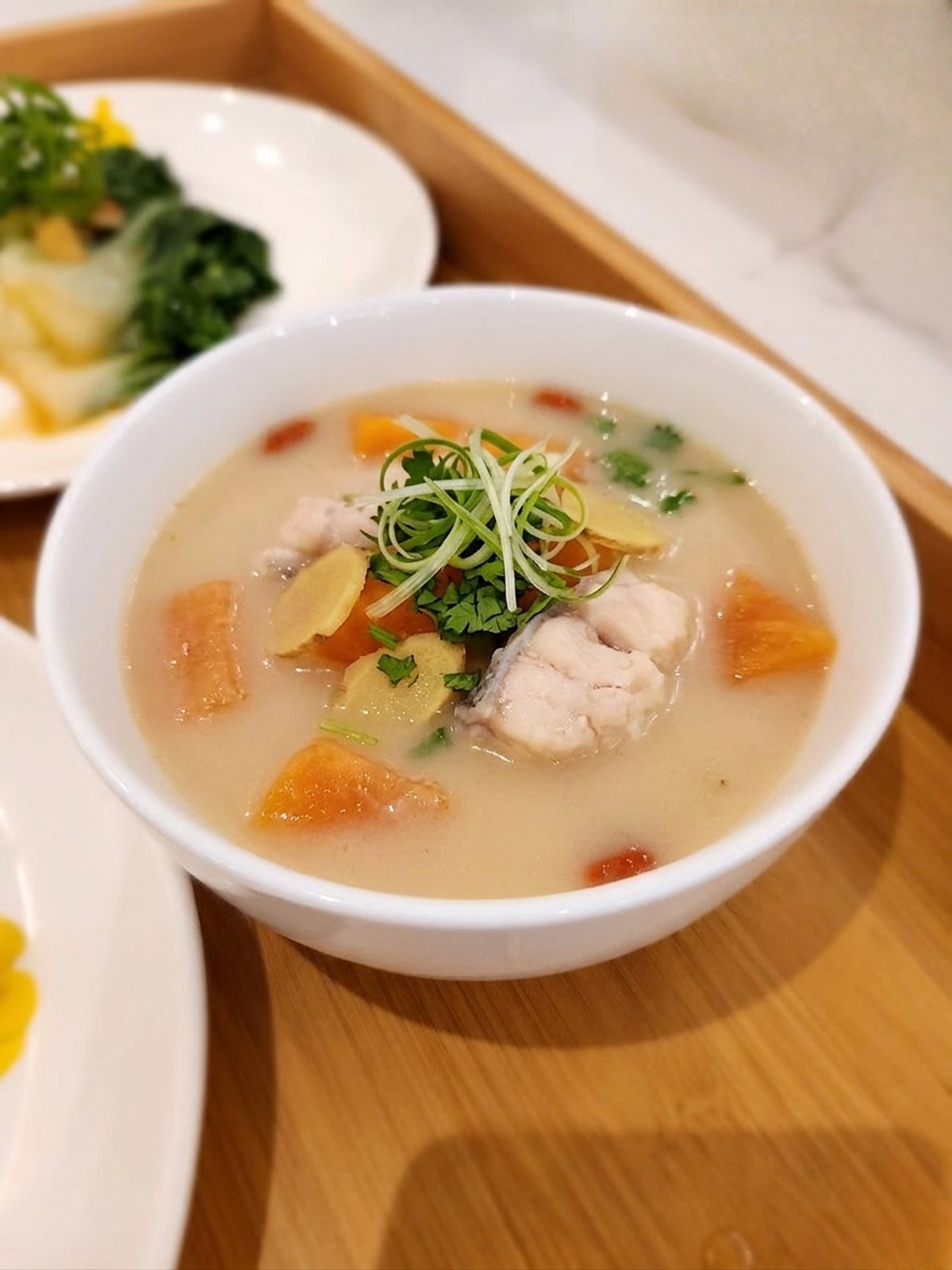
- Papaya: the confinement favourite. Ripe papaya is gentle, soft and easy on digestion, and it turns up in fish soup too.
- Apple: neutral. Best stewed or steamed in the first two weeks.
- Longan and lychee, in small amounts: warming, but also sweet. A few pieces, not a bowl.
- Grapes and cherries: a small handful at room temperature.
- Cooked pear: raw pear is cooling, but a pear simmered with ginger and a few red dates is a very common 月子 dessert.
Which fruits usually wait
These are the ones most families ask you to hold off on for the first two to four weeks:
- Watermelon, honeydew and other melons: the classic "cooling" group.
- Dragon fruit, pomelo, grapefruit and kiwi: cooling or sharp, often held back until around week 3.
- Banana: mildly cooling, and many mums feel bloated on it. A few families allow it if you are constipated.
- Mangosteen, starfruit and young coconut water: strongly cooling in the traditional view.
None of these will harm you in the modern medical sense. It is a tradition question, and you get to decide how much of it you follow.
What modern nutrition says
Here the two worlds meet in the middle. A new mum who skips fruit completely tends to run short on fibre and vitamin C. Fibre matters because constipation after birth is very common (it is the reason your first poo can feel like a project). Vitamin C helps your body absorb iron from the red dates, liver and dark greens that confinement meals are built around.
So most dietitians would say: eat some fruit every day. A fist-sized portion, one or two times a day, is plenty. If you have had gestational diabetes, ask your doctor how much sweet fruit suits you, because fruit sugar still counts.
How to eat fruit the confinement-friendly way
- Room temperature. Take it out of the fridge 30 minutes before. Cold from the fridge is what actually shocks a tired stomach.
- Cut small, eat slowly. Easier on digestion, and easier with a baby in your other arm.
- Eat it between meals, not straight after a big bowl of sesame oil chicken, so it does not feel like too much at once.
- Stew it. Apple or pear with a slice of ginger and 2 to 3 red dates, simmered for 20 minutes, gives you fruit in a warm form your family will approve of.
- Watch your own body. If a fruit gives you cramps or loose stools, drop it for a week. If it sits well, keep it.
The honest part: durian and the family vote
Durian is where every Malaysian family splits. It is "heaty" in the traditional view, it is rich and very sweet, and a few pieces carry a good number of calories. Some mums eat it from week 3 and swear by it. Others get a sore throat and stomach upset. If you love it, a small piece late in the stay is a reasonable compromise.
And if your family and your doctor disagree on a fruit, you are not obliged to pick a winner in public. Eat what sits well with you, and let the aunties have their say.