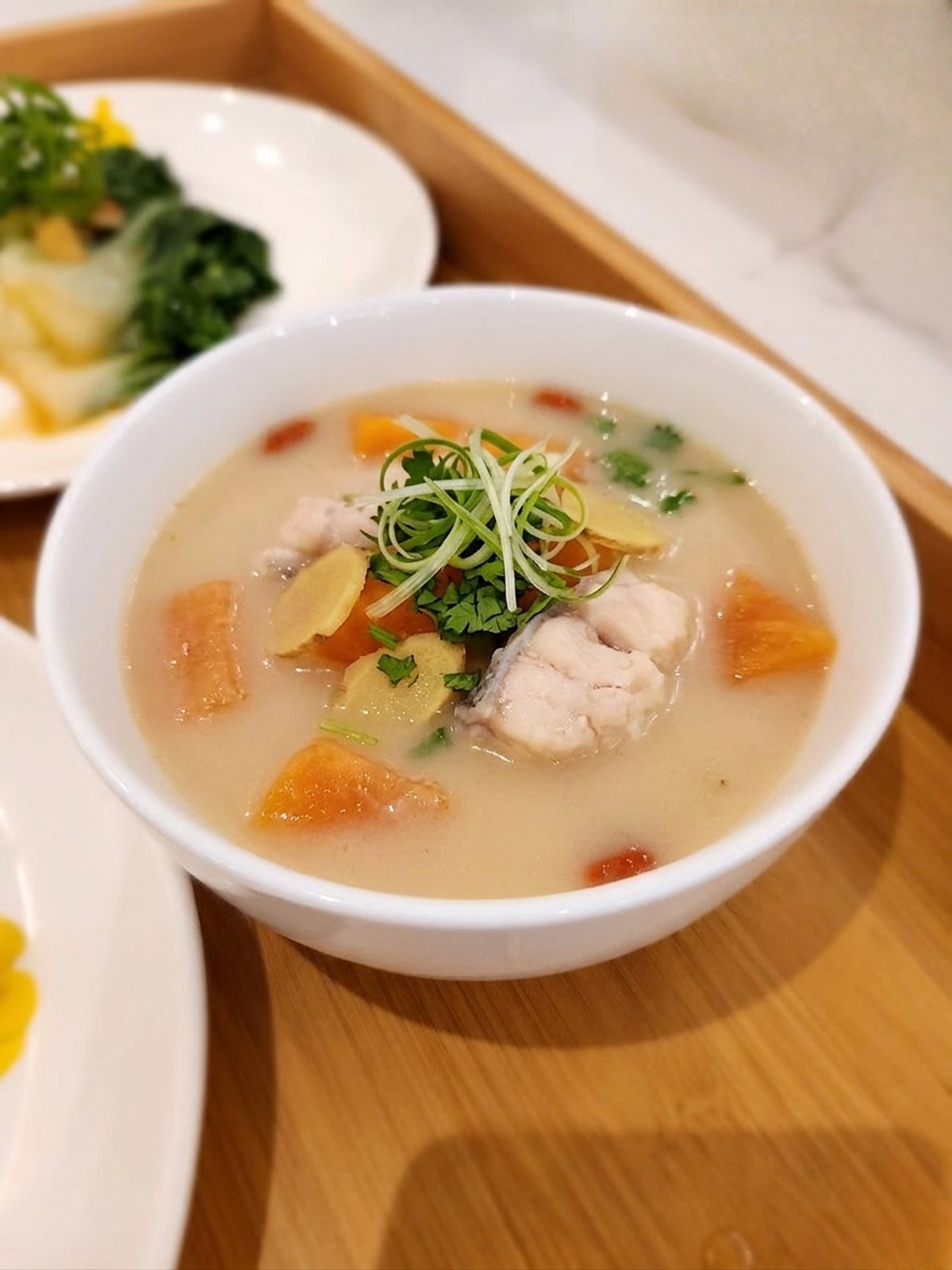
Day 4 of confinement, and the fish soup shows up again. Nobody explained why, they just handed you the bowl and said drink, so you drank it, and it was better than you expected. Turns out somebody, somewhere down the family line, was onto something real.
Confinement meals get treated as ritual first and food second, sesame oil chicken because that is what mums have always eaten, papaya fish soup because grandma insisted. Fair enough. But strip away the folklore for a minute and look at what actually lands on the tray, protein-dense soups, warm liquids in volume, small frequent portions, and it turns out to line up almost exactly with what a body making milk needs to keep up.
What confinement food is actually built to deliver
Whether or not you buy into the traditional framing of "warming" versus "cooling" foods, the macros tell their own story. A typical confinement day serves protein at almost every meal, fish, chicken, pork trotters, egg, usually in soup form so it is easy to eat one-handed while a newborn naps on your other arm. There is moderate fat, sesame oil chicken being the obvious example, for calorie density on days your appetite cannot keep pace with your needs. And meals arrive in five or six smaller rounds instead of three big sit-downs, which happens to match a newborn's feeding rhythm far better than a conventional meal schedule ever could. Nobody sat down centuries ago with a calculator and macros in mind. Generations of trial and error got there first, and the science mostly caught up and agreed.
The soups, decoded
Papaya fish soup. White fish is lean, mild, and easy to digest, green papaya carries papain, an enzyme that helps break down protein, and the whole bowl arrives warm and liquid at a moment your appetite is unpredictable and your jaw is tired from talking to someone who cannot talk back yet. It is the reason this soup shows up on day 3 to 5 across nearly every confinement kitchen in KL.
Herbal chicken soup and homemade chicken essence. Concentrated protein and iron. Iron matters twice here, once to help replace blood lost during birth, once to keep your own energy from crashing while your body diverts nutrients into making milk.
Black vinegar pork trotters. Collagen and iron again, and the vinegar is credited with easing joint recovery after weeks of carrying a baby, feeding sessions, and broken sleep. Less about milk output directly, more about keeping the rest of you from falling apart while your body makes it.
Sesame oil chicken. Fat for calorie density on the days your appetite is smaller than your actual needs, which happens more often than any confinement schedule likes to admit.
The numbers nobody puts on the tray
While breastfeeding, most mums need roughly 330 to 500 extra calories a day above their pre-pregnancy baseline, more if you are feeding twins or a big, hungry newborn. Protein needs climb by about 25 grams a day, roughly one extra palm-sized portion of fish or chicken. And you are losing close to 700ml of fluid daily to milk production alone, on top of normal hydration needs. A kitchen serving small meals every few hours instead of three large ones is, whether anyone frames it this way or not, solving exactly this problem: getting enough calories, protein, and fluid into a body that rarely gets an uninterrupted hour to sit down and eat properly.
Timing beats content, most days
A warm, protein-heavy bowl about 30 to 60 minutes before a feeding session means your body has fuel ready when your baby actually calls for milk, instead of trying to digest something mid-let-down. Small, frequent meals also fit a newborn's rhythm better than three sit-down meals ever could, since feeds land every 2 to 3 hours and your own mealtime routinely gets interrupted by a hungrier, louder client.
The honest part: what the food genuinely can't fix
No soup, however carefully brewed, fixes a shallow latch, an infrequent feeding schedule, or a genuine medical cause of low supply, retained placenta fragments, thyroid issues, and insufficient glandular tissue among them. Food supplies the raw material. What actually drives supply is frequent, effective removal of milk, a baby feeding well and often, or a pump doing the same job when direct feeding is not possible. If you are eating well, drinking every soup on the tray, and supply still is not moving, the problem probably is not in the kitchen.