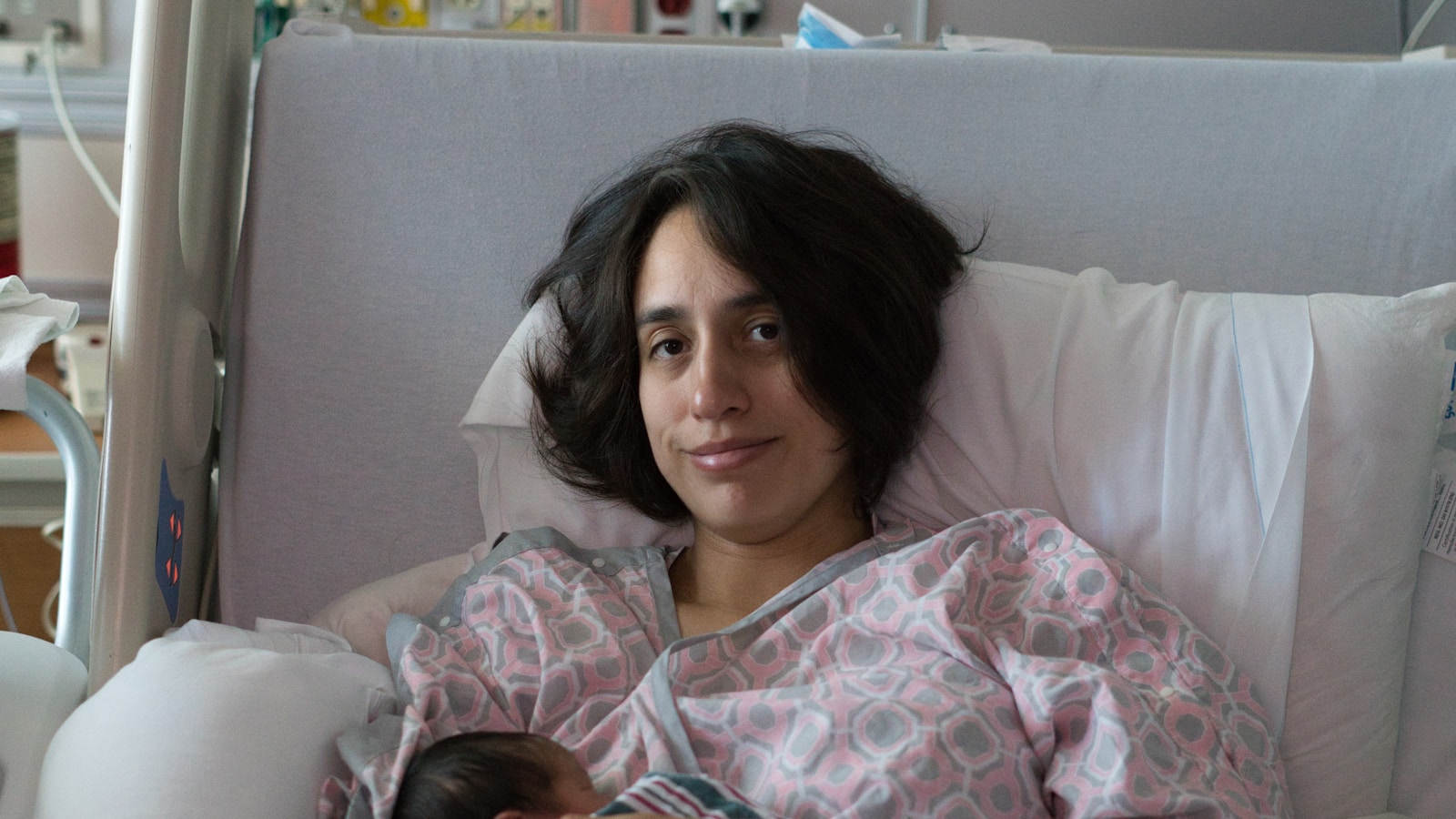
Your baby was born about three months too early. Not medically, biologically. Human babies come out helpless because our heads had to squeeze through a pelvis that also has to walk, and evolution made the compromise on your side. The result: the first twelve weeks after birth are less a "newborn phase" and more "still finishing, just externally." That stretch has a name. It is called the fourth trimester, and understanding it will change how the next three months feel.
What the fourth trimester actually means
The paediatrician Dr. Harvey Karp coined the phrase to describe what he saw: newborns behave like little wombs on legs for the first ~12 weeks. A foal walks in an hour. A puppy opens its eyes in ten days. A human baby cannot hold its own head up until roughly week 6 and cannot roll until roughly month 4. The trade for our big brains is a very long "outside cook" time.
Practically, this means your baby's nervous system is still expecting the environment it had for nine months. Dim light. A steady 37 degrees. Constant motion. The muffled roar of your blood. And you, always, at a distance of zero. Anything that pulls those away, a bright light, a cold changing mat, being placed alone in a still cot, tends to be met with a protest. The protest is not a personality trait. It is biology asking for the missing input.
Week by week, roughly
Weeks 0 to 2, the honeymoon. Baby is sleepy, small, and mostly cycles through feed, sleep, poo. Expect a 5 to 10 percent drop in weight in week 1 and a climb back to birth weight by day 14. This is the quiet phase where you think, "this is manageable." It is a slightly unfair impression, because it does not last.
Weeks 2 to 6, the wake-up. Eyes open more. Cluster feeding hits, especially in the evening (see Cluster Feeding). The witching hour arrives around week 3 to 6 (see The Witching Hour). If colic is coming, it usually peaks around week 6 and eases by month 3 to 4. Mum's own week 2 to 3 tearfulness lands here too (see Day 14 Cry). This is the hardest stretch. It is also the shortest.
Weeks 6 to 12, the shift. The first real social smile shows up around week 6. Baby starts tracking your face across a room. Sleep stretches lengthen: from 45-minute cycles to occasionally 3 to 4-hour blocks at night. You might go 3 to 4 hours between daytime feeds instead of 2. Personality starts leaking through. You catch yourself, for the first time, noticing something other than the baby.
What baby actually needs
Karp's famous shortlist is the 5 S's. They work because they recreate the womb:
- Swaddling. Snug wrap, arms in, hip-safe. Mimics the tight walls of the womb. Stop swaddling once baby shows signs of rolling (usually 2 to 4 months).
- Side or stomach hold. For soothing while you hold them, awake and supervised. Never for unsupervised sleep. Back is still the only safe sleep position.
- Shushing. Loud, near the ear, roughly as loud as a hairdryer. In the womb, blood flow is about 90 decibels. Silence is the strange environment, not noise.
- Swinging. Small, fast, rhythmic motion. Not a big sway. Think heartbeat, not lullaby.
- Sucking. Breast, finger, pacifier. The reflex is calming in itself.
Beyond the 5 S's: skin-to-skin whenever you can. Feed on demand for now, schedules come later. And a quietly warm room usually beats a silent nursery. New parents often over-shush the space; babies sleep worse in silence than they do with a bit of household noise going on.
What YOU actually need
The fourth trimester is not just baby's. Your body is still healing (see Lochia). Hormones are dropping like a lift with a cut cable. Sleep is smashed into small pieces. So:
- Sleep in the stretches you can grab. Not "sleep when the baby sleeps." Sleep during the first long stretch after the last big feed. That is usually your best window.
- Warm, salted, real food. Confinement cuisine is built for this reason. Something warm, calorie-dense, and cooked for you beats anything you assemble at 2pm with a baby on you.
- One trusted adult who checks on YOU, not the baby. The visitors who ask "how are you" and mean it are worth their weight in gold.
- A carrier, once you feel up to it. Frees your hands, mimics womb pressure for baby, and gets you outside without a full pram operation.
- Naming the mental load. Write it down. Say it out loud. It stops being invisible the moment it has a name (see Mental Load).
The honest part
The fourth trimester is a full-body, full-heart marathon and it does not end at day 28 or day 40. It ends around week 12, quietly. Nobody hands you a certificate. What happens is smaller than that: one afternoon you notice the baby smiled at you across the room instead of at the ceiling. That night, you get four hours in a row without meaning to. The next morning, you have a coffee while the baby watches a mobile for eleven minutes on its own. The shape of your day starts holding still for you again. You will still be tired. You will still be recovering. But you will feel, for the first time, like a person who has a baby, rather than a person who serves one. Hold on to that shift when it feels like week 3 is going to be your whole life. It really, honestly, is not.