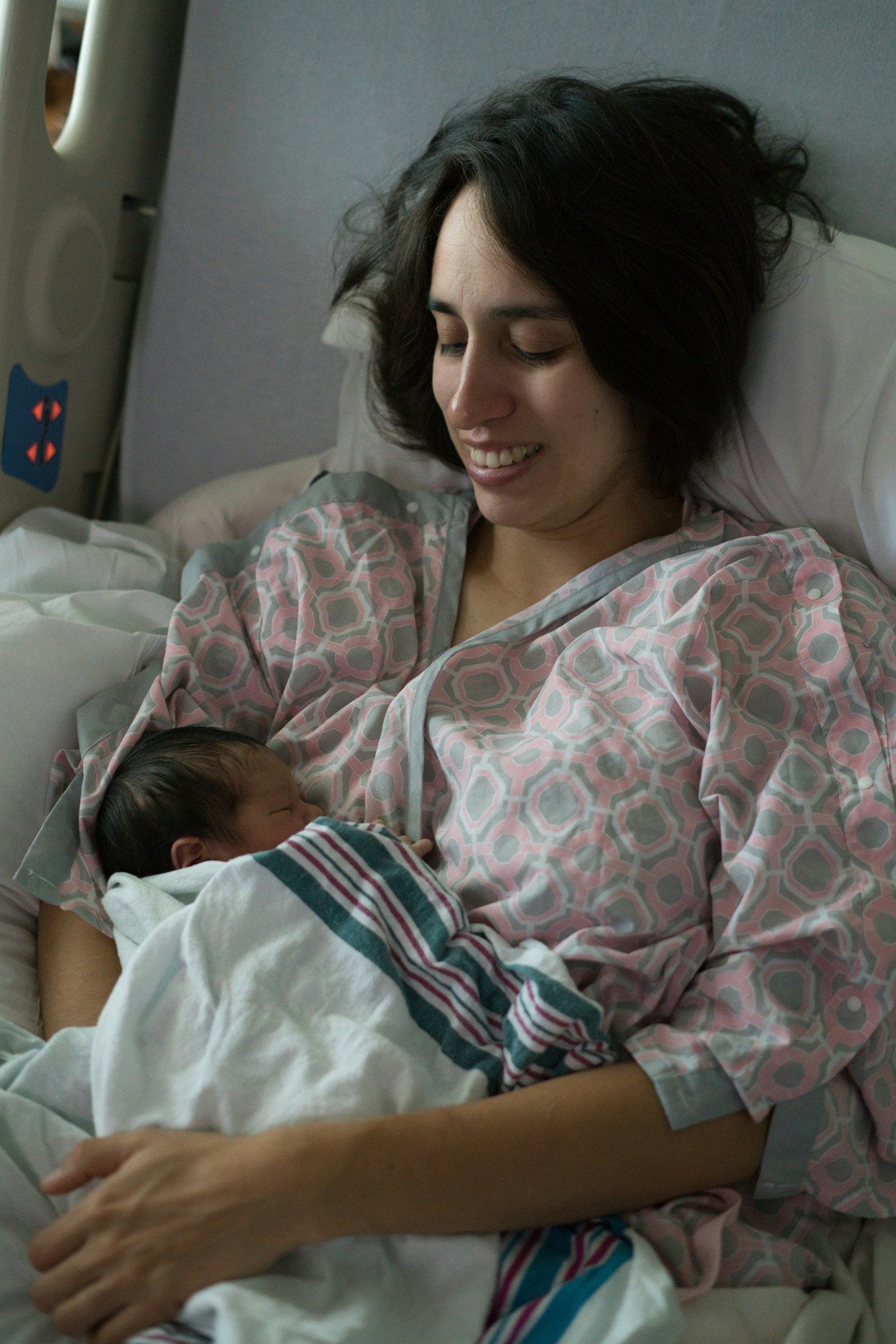
Day 14. You are halfway through. The pork ribs and red dates soup arrives at 6:15pm like it has every evening this week, and tonight, for no reason you can name, you start to cry into it. The ginger smells the same. The ribs are the same. You are not.
If this is you, you are not broken, and you are not the only one. The day 14 cry is one of the most predictable, least discussed parts of confinement.
What is actually happening at the midpoint
Confinement runs on a curve. Week 1 is adrenaline. You just made a baby. You are alive. Visitors are texting. The soup tastes new. Week 2, the adrenaline runs out. The baby still feeds every 2 to 3 hours. You have slept in 90-minute chunks for 14 nights running. The visitor count thins. The texts space out. Your own mother went home. The room that felt like a refuge in week 1 starts to feel like a small box.
None of this is a sign that you are doing it wrong. This is the shape of recovery. The first half is held up by novelty and helpers. The second half asks more of you, with less.
Why day 14, specifically
Day 14 is roughly where three curves cross.
Sleep debt has compounded. One bad night used to be one bad night. Now one bad night drags you under for 36 hours. Estrogen and progesterone, which fell off a cliff within 24 hours of birth, are at their lowest point of the recovery. And the social scaffolding is at its weakest: the visitors have visited, the "congratulations" WhatsApps have peaked, and you are alone with the version of motherhood that nobody Instagrams.
The cry is the system letting pressure out. It is not a malfunction. It is a release valve doing its job.
It is not the soup
This is where the Cantonese aunties and the Tamil aunties and the Hokkien aunties all reach the same diagnosis. The soup is too 燥 (heaty). Or too 寒 (cold). Or has too much wong qi (yellow rice wine). Or is missing the herb that would have prevented this.
The soup is taking the blame for something it did not do. Confinement food is not making you cry. Confinement food is one of the few constants in a week where nothing else is. If a specific herb genuinely disagrees with you (real rash, racing heart, real gut distress), tell the kitchen and they will swap. But "I cried at dinner" is not a soup problem. It is a day 14 problem, and pulling the wong qi will not fix the sleep debt.
What actually helps
Six things that move the needle, roughly in order of payoff.
- One nap before 4pm. Dark room, phone off, even 30 minutes. The afternoon dip is real, and an early nap is the only thing that touches it.
- Get out of the room for 10 minutes. The balcony, the corridor, the garden, the lobby. New light, new air. Take baby, or leave baby with whoever is around. Just change the wallpaper.
- Ask one specific person to talk for 20 minutes. Not "anyone free?", that gets you no replies. Pick someone, name the time, ask. One real conversation a day at week 2 is worth more than ten group-chat reactions.
- Name it out loud. "Today is hard." "I am crying and I do not know why." Saying it shrinks it. Bottling it doubles it. The person you say it to does not even have to fix it.
- Eat the soup anyway. Even when you do not feel like it. Recovery is fuelled, and the soup is hot iron, collagen, and protein. Your body knows what to do with it even when your head is full of static.
- Move 50 steps. Not exercise. Walking the length of the corridor and back. Postpartum bodies are still healing, and gentle movement is medicine. Sitting still for hours is fuel for low mood.
The honest part
Baby blues are real. They peak around day 3 to day 5. For most mums they fade by day 10 to 14. So a cry that lands at day 14 is usually one of three things: the tail end of the blues, accumulated sleep debt and isolation, or the first whisper of postpartum depression.
The first two pass on their own with rest, daylight, and a real conversation. The third does not, and it does not have to. Postpartum depression is not weakness. It is a treatable condition. It is also more common in confinement than people admit because the structure of confinement itself (isolation, sleep deprivation, the hormone cliff) is exactly the soil PPD grows in. Catching it at week 2 is much easier than catching it at week 8.