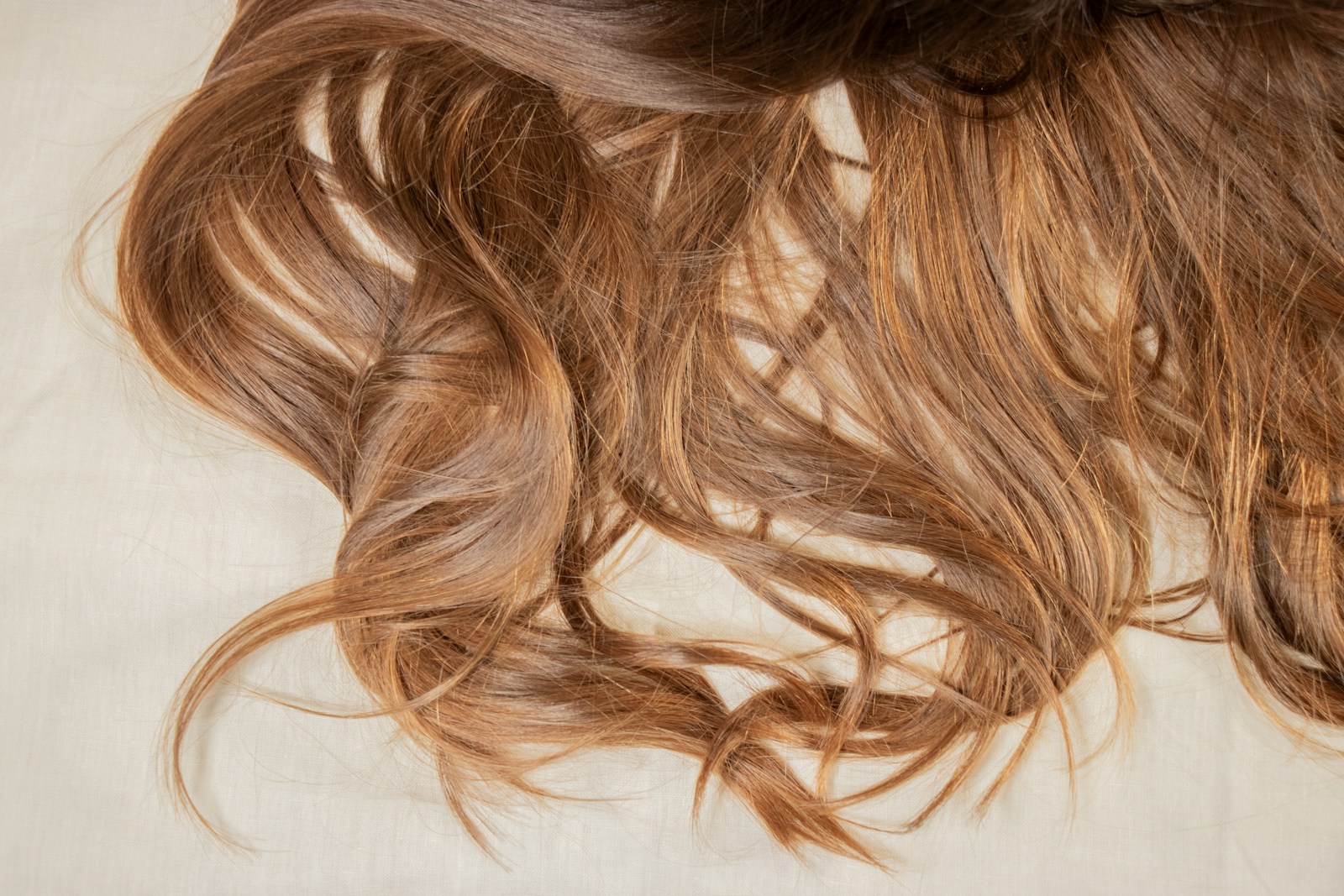
Three months in, your hair starts showing up in places it never used to. The pillow. The shower drain. Your baby's tiny gripping fist during a feed. You walk past the bathroom mirror at month 4 and quietly wonder if you're going bald. You are not. This is The Great Shed, and it is a very ordinary chapter of postpartum recovery. Here is what is happening, when it stops, and the two or three things that actually help.
Why the shed happens (in one paragraph)
In ordinary life, everyone loses somewhere between 50 and 100 hairs a day. During pregnancy, rising oestrogen puts that daily shedding on pause. You gain a thicker, glossier head of hair that you probably enjoyed in trimester three, when almost nothing else about your body felt like a gift. Then baby arrives, oestrogen drops within a week, and all the hair that would have shed across those 9 months is suddenly due to leave. It leaves. Almost all at once, over about 12 weeks. The medical name is telogen effluvium. The mum name is The Great Shed.
The month-by-month timeline
Every mum's exact curve is a little different, but the general shape is predictable:
- Month 1 to 2: pregnancy hair is still hanging on. You look and feel about the same. If you are already shedding heavily this early, mention it at your 6-week check.
- Month 3: it begins. First a few extra strands on the pillow, then in the ponytail tie, then in the drain in visible clumps.
- Month 4: the peak. This is the worst week for most mums. You will lose noticeably more per day, and it can genuinely feel alarming. This is also when most mums google "am I going bald."
- Month 5: the shed continues but at a lower rate. You are past the worst without realising it.
- Month 6: it slows to a normal daily rate. The clumps in the shower stop.
- Month 7 to 9: baby hairs start appearing along your hairline and around the ears. Little flyaways you cannot smooth down with any product.
- Month 9 to 12: those baby hairs grow into a soft second layer. Volume returns.
- Month 12 to 18: full recovery for most mums.
Two things worth marking on that timeline. One, the total volume you lose is almost never as much as the sink drain suggests. Wet hair clumps in a way that makes any amount look like a horror story. Two, if you are still shedding heavily at month 9, or you see actual bald patches (not general thinning), that is a different picture and worth a GP visit.
What actually helps
Honestly, not much. Time is the biggest single factor. But five small things support the process:
- Wide-tooth comb on damp hair, always. A fine brush on wet hair tugs strands that are already loose and makes the shed look worse than it is.
- No tight ponytails or top-knots for a while. The tension pulls on strands at the hairline that are the last to grow back. A loose braid or a soft low tie is kinder.
- A gentle, sulphate-free shampoo. Not because harsh shampoo causes the shed (it doesn't), but because it makes your existing hair feel drier, which reads as worse-condition to your eyes.
- Blow-dry on warm, not hot. Postpartum hair is not more fragile than usual, but you notice every strand right now.
- Iron-rich meals across the day. Low iron does not cause telogen effluvium, but it makes any shed feel heavier and can delay regrowth. Confinement meals in the KL tradition (pig's trotters, black-bean soup, red-date and goji tea, sesame-oil chicken) are naturally iron-heavy for exactly this reason.
What does not help
Two things get sold to postpartum mums every week that are honestly a waste of money:
- Expensive "hair growth" serums. There is no topical serum, oil, or lotion that stops telogen effluvium. If a product worked, every dermatologist would recommend it. What actually works is time.
- Biotin megadoses. Biotin only helps if you are deficient, which almost nobody is. High-dose biotin also skews some thyroid blood tests, which is unhelpful precisely when you might want a clean thyroid reading.
The ordinary postnatal multivitamin your obstetrician gave you at discharge is enough. If you were sent home with iron and folate, keep taking them, especially if you were anaemic before or during pregnancy.
When it is worth asking for bloods
Most postpartum shedding needs no medical follow-up. It is a hormone story, and it resolves on its own. But there is a small window where a quick blood panel makes sense:
- The shed is still visibly heavy at month 9.
- You see actual bald patches or a receding hairline, not general thinning.
- You feel deeply tired, cold, and low, in ways that do not feel like ordinary new-mum exhaustion.
- Your periods have not returned by month 9 (and you are not exclusively breastfeeding).
Any one of those is worth a GP visit and asking for a full blood count, ferritin, TSH and free T4, vitamin D, and vitamin B12. Postpartum thyroiditis is a real, small-but-noticeable thing that can show up in the first year, and it often looks like "just" tiredness and hair loss. This is information, not medical advice. Your doctor knows your case.
The honest part
The Great Shed is the part of postpartum recovery that hits hardest emotionally without hitting hardest physically. You will stand in front of a mirror at month 4 and feel unrecognisable. Some mums cry over this more than they cried over lochia or stitches. There is a specific grief in watching what feels like your body letting go of parts of you. That grief is real, and it is not vanity, and the fix for it is not a serum.
Two months from your peak, you will look in the mirror again and notice, quietly, that the flyaways around your ears are not damage. They are new. They are baby hairs. They are yours, and they came back.