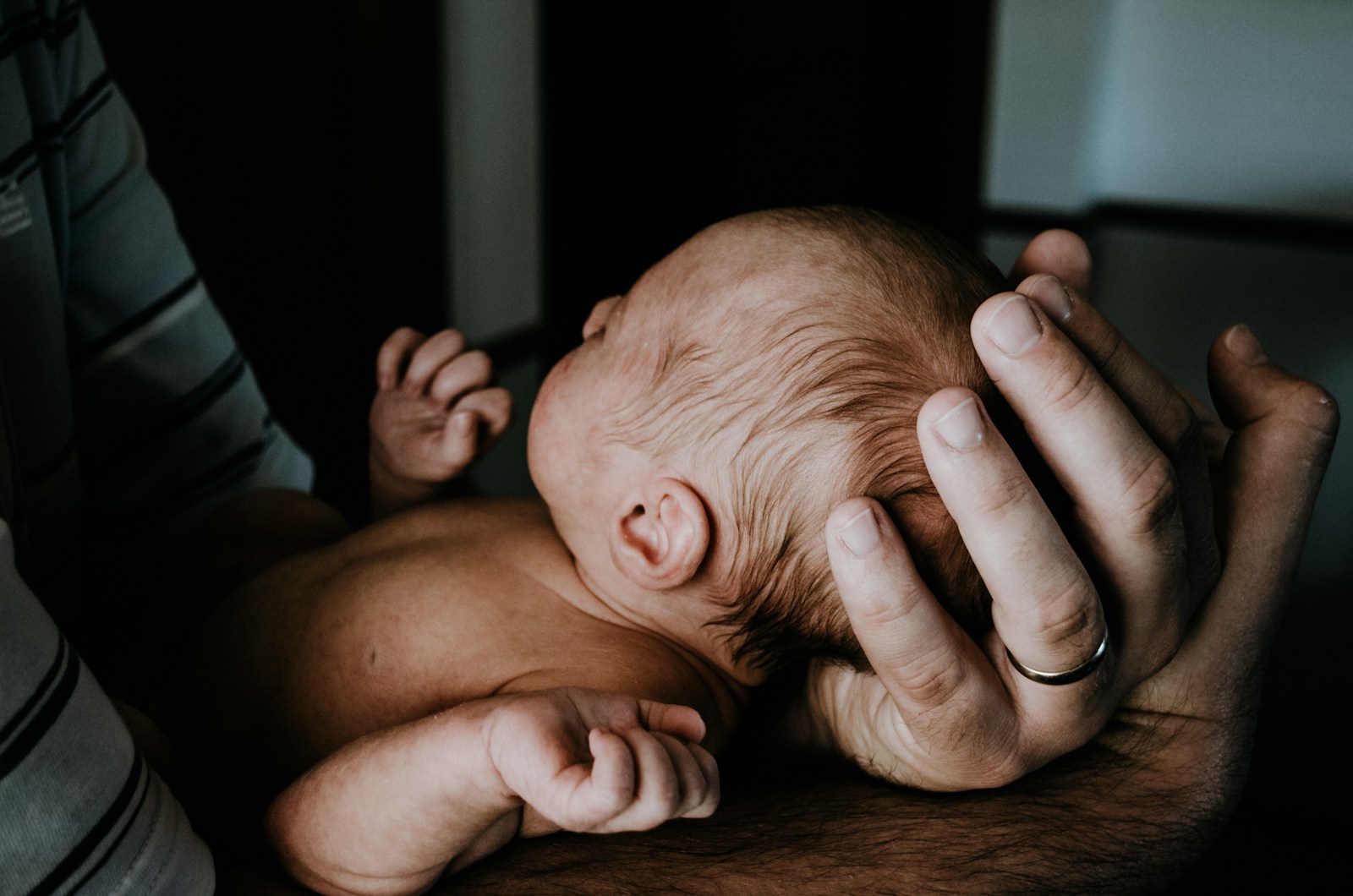
The baby aisle at your nearest Aeon has three shelves of skincare aimed at your newborn. Bottles in pastel labels, sold in gift sets by the auntie at the counter, promising softer skin, calmer nights, better bonding.
Your newborn needs almost none of it. Not because the products are bad. Because their skin already came with everything it needs.
What newborn skin is doing in week 1
Your baby spent nine months floating in salty water. In the first 48 hours out, the vernix (that cheesy white coating the delivery team may have wiped off, or not) is still working: it moisturises, protects against bacteria, and helps the skin transition. Do not scrub it off. It rubs in on its own within a day or two.
Underneath the vernix, newborn skin is about 30 percent thinner than adult skin, absorbs everything you put on it much faster, and has a barrier that is not fully mature until about the 12-month mark. That is the whole reason for the "less is more" rule. Anything you rub in is not sitting on top like it does on you. It is going in.
Around day 3 to day 7, expect some peeling on the hands, feet, ankles. Ignore it. That is the outer layer sloughing off, not dry skin, and moisturiser will not speed it up.
The bath question
Two full baths a week is enough in the first month. On the other days, a soft, warm wipe-down with clean water and a muslin cloth, paying attention to the neck folds, the armpits, and behind the ears where milk and sweat collect.
The rules for a full bath:
- Water at 37 to 38 degrees C. Your inner wrist should feel comfortably warm, not hot. Get a cheap bath thermometer if you are not sure; KL tap water in July can swing wildly.
- Five to ten minutes, no longer. A newborn cools down fast and long baths strip the skin barrier.
- Water only, or a tiny pump of a fragrance-free, pH 5.5 baby wash. Skip anything labelled "antibacterial" or "deep cleansing". Newborn skin is slightly acidic (pH around 5 to 5.5) and adult soaps push it alkaline, which is where irritation starts.
- Pat dry, do not rub. Especially in the neck folds. Trapped moisture is where the sour-milk smell and the first rashes live.
Umbilical stump still attached? Sponge baths only until it falls off (usually day 7 to day 14). Keep the stump area dry, no submerging.
The nappy area
The nappy area wants three things and only three: air, dryness, and a boring barrier.
Change the nappy every 2 to 3 hours in the day and once overnight if baby wakes for a feed. Wipe with plain warm water and a cotton pad or soft muslin. Scented wipes are convenient at Petronas but they are a common cause of the first "why is baby red down there" call. If you use commercial wipes, pick fragrance-free, alcohol-free.
At the first hint of pink, a thin layer of a plain zinc-oxide barrier cream (Sudocrem, Bepanthen, Desitin, the Watson brand) at every change. Zinc oxide is the workhorse ingredient; skip anything marketed as "healing lotion" without it. Two to three days of consistent barrier cream and a few extra minutes of bare-bum air time on a towel usually clears it.
Rashes that look scary but are not
Three things almost every Malaysian newborn goes through, and none of them need a product:
- Milia. Tiny white bumps on the nose and cheeks, present at birth, gone by week 4. Do not squeeze them.
- Baby acne. Red pimples on the cheeks and forehead, usually arriving day 10 to 14, gone by week 6 to 8. Maternal hormones on the way out. No cream, no oil.
- Cradle cap. Yellow flaky patches on the scalp, week 2 onward. Loosen gently with a soft brush after a bath, do not pick. We wrote a whole piece on it last week.
Erythema toxicum, the blotchy red rash with tiny pale centres that a lot of newborns get in week 1, also self-clears. Alarming looking, medically boring.
Products to leave on the shelf
A short list of things marketed for newborns that the paediatric consensus says to skip:
- Talcum powder. Inhaled particles are a lung irritant. Cornstarch powder is only marginally better and traps moisture into folds.
- Adult-fragranced lotions and oils (yes, including the classic yellow bottle for adults that gets used on babies here). Fragrance is the most common trigger of newborn dermatitis.
- Antibacterial soaps and hand sanitiser on baby's skin. Their microbiome is still setting up.
- Cotton buds inside the ear canal. Outer ear only, and only if visibly needed. Ears are self-cleaning.
- Chinese herbal powders from a well-meaning aunty for "heaty" babies. Unregulated dose, unknown source, absorbed through thin skin. Not worth the gamble.
The honest part
Someone in your life is going to hand you a full skincare set with strong opinions attached. Take it with a smile, keep the packaging, and use one thing at a time so that if a rash pops up you can actually tell which product caused it.
The other honest thing: if the "less is more" rule feels wrong because your baby genuinely has dry, cracking skin (real cracks, not the day 5 peel), that is different. A thin layer of a plain, fragrance-free emollient (petroleum jelly, or a ceramide cream like Cetaphil Baby or QV Baby Balm) after the bath is fine. One product, applied thinly, once a day. That is still "less is more" in spirit.