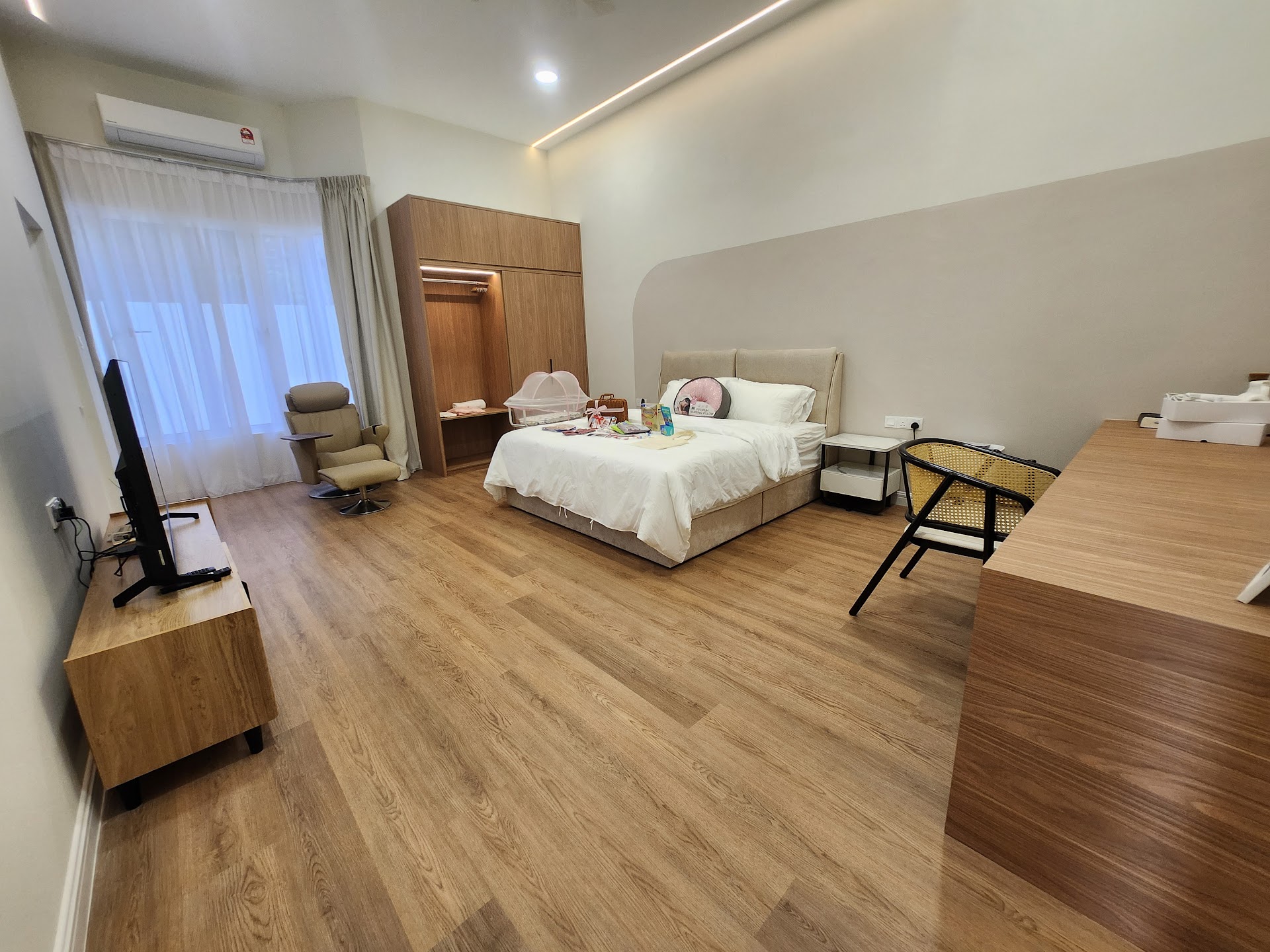
Day 6. You are sweating through your third outfit of the day, KL is doing its usual 33 degrees with 85% humidity outside, and someone in the family has just unplugged the air-con remote and hidden it in a drawer "for your own good." You did not imagine that. It happens in confinement rooms across the Klang Valley more often than anyone admits out loud.
Here is the honest answer, the one that usually gets lost between "the old people say no" and "just turn it on, you'll be fine": air-con during confinement is not the problem. A cold draft hitting a sweat-damp body is the problem. Once you separate those two things, the rest gets a lot simpler.
Where the fear actually came from
In the kampung houses where 月子 traditions took shape, there was no air-con to argue about. A body healing from birth already runs hotter and sweats more than usual, hormone shifts and extra blood volume clearing out both push perspiration up in the first two weeks. A strong, unmodulated blast of cold air landing directly on damp skin, especially the head, neck, and joints, was a real recipe for chills, aching joints, and a nasty cold stacked on top of recovery. The old term for it is 风寒, wind-cold, and the physical mechanism behind it is genuine. What got lost over generations is the specific part: it was never the cool room. It was the direct draft hitting a wet, weakened body.
The KL heat problem is just as real
Malaysia's climate does not do a mild, dry spring. Daytime humidity regularly sits around 70 to 90%, and temperatures hit 32 to 34°C most afternoons. A mum going without air-con for 28 days is sweating almost constantly, losing fluid her body needs for milk production, and sleeping badly in a hot room on top of a newborn's own wake-ups every 2 to 3 hours. Overheating also raises the risk of heat rash and dehydration headaches for mum, and for a newborn sharing that same room, a genuinely higher risk, since babies cannot regulate body temperature the way adults do. A cool room during confinement is not indulgence. It is basic thermoregulation for two people who both need real sleep to recover.
The four rules that make air-con actually safe
- Set it to 24 to 26°C, not 18°C. Cold enough to stop the sweating, warm enough that stepping out of the room does not shock your body.
- Point the vent away from your body, your head, and the cot. Angle the louvre or reposition the unit so air moves across the room instead of landing directly on anyone.
- Dry your hair completely before switching the unit on. This is genuinely the one piece of the old fear that still holds up today: wet hair under a cold vent is asking for a headache and stiff shoulders.
- Give yourself 20 to 30 minutes between a hot shower or herbal bath and sitting directly under the airflow. Let your skin cool gradually instead of shocking it straight from steam to cold.
Keep a pair of socks on even in a cool room. Cold feet is one of the more common small complaints in the first two weeks, air-con or not, and it costs nothing to prevent.
What about the baby
Newborns cannot shiver or sweat efficiently to regulate their own temperature, and they overheat faster than they get cold, which is exactly why overheating is flagged as a genuine risk factor in infant sleep safety guidance, not just an old family worry dressed up in medical language. A room held steady at 24 to 26°C, with baby in a single light layer plus a swaddle or sleep sack, is generally safer than a hot, humid room with baby overdressed "just in case." Feel the back of baby's neck, not the hands or feet, to judge temperature: warm and dry is right, sweaty or hot to the touch means one layer too many, cool and clammy means turn the unit down a notch. Keep the cot out of the direct airflow path the same way you would keep yourself out of it.
The honest part: when family still says no aircon at all
Some families hold the line completely, and no explanation about vent angles is going to move them in a single conversation. What tends to work better than debating "is it healthy" is offering a specific, visible compromise instead. Run the unit on a timer that switches off two hours before the household wakes, so nobody is ever lying directly under airflow overnight unattended. Show, physically, that the vent has been angled away from the bed, rather than just promising it in words. If a dehumidifier is an easier sell than an air-con unit, it solves the "clammy, sticky air" complaint without the temperature argument at all. And if one family member genuinely cannot relax with the compressor running, a fan pointed at the wall, not at anyone, moves the air without the cold, and buys everyone time to settle into a rhythm they can all live with.