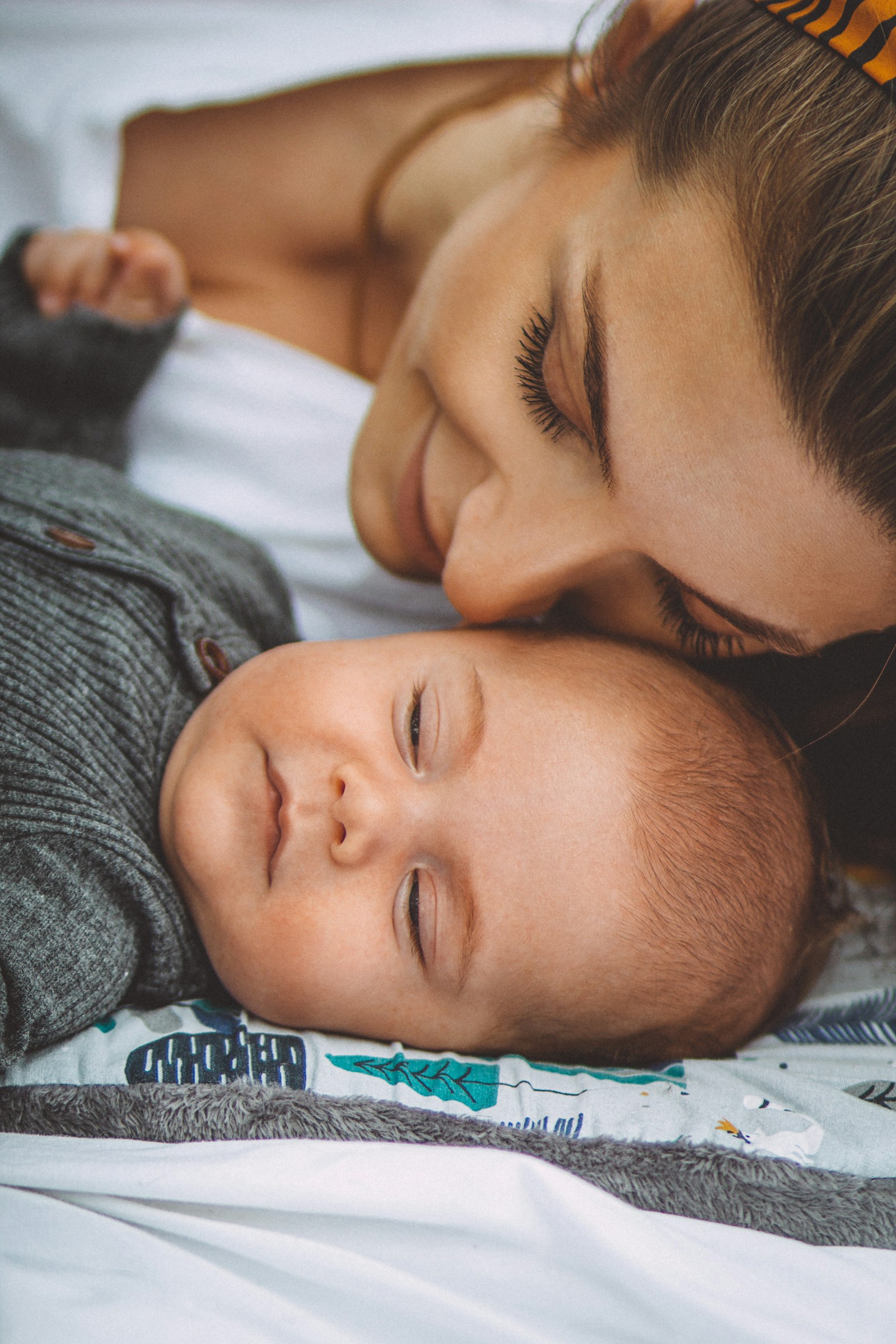
It is 3:04am. The baby is up. You had two hours and eleven minutes of sleep. The words "milk" and "silo" briefly meant the same thing in your head. This article is for that moment.
Night feeds are not a design flaw. They are, if anything, the whole point of the first three months. What you can change is how much of yourself they eat: your back, your temper, your sense of being human at 4am. There are three things worth learning early. Side-lying, the dream feed, and how to bed-share safely if it comes to that. All of them buy you back real sleep.
Why 3am, specifically
Prolactin, the hormone that tells your body to make milk, peaks between about 2am and 5am. It is roughly double what you produce mid-afternoon. Which means the 3am feed is not the enemy of your supply, it is the engine of it. Skipping it (letting a partner give a bottle, say) in the first 6 weeks is a shortcut with a price tag: your supply reads a missed night feed as a demand cut, and dials down.
Baby's side of the equation is simpler. A stomach the size of a marble at birth (5 to 7ml), a small chicken egg by day 3 (about 30ml), a large egg by month one (80 to 150ml). Nothing that small stays full for four hours in a row. You are supposed to be back on the clock in 2 to 3.
Bonus fact for the curious: night milk carries more melatonin and tryptophan than day milk. Your body is not just feeding baby at 3am. It is sending sleep signals. Once you know that, the 3am feed feels less like a betrayal and more like the piece of clockwork it actually is.
Side-lying, done right
The single biggest sleep-saver of the first 12 weeks. Both of you almost horizontal, both close to sleep, neither one sitting bolt upright at 3am willing yourself to focus.
How to set it up:
- Firm mattress. No soft top, no memory foam sag. Baby needs a flat, firm surface, not a canyon.
- Both on your side, facing each other. Knees bent gently. Baby's nose lined up with your nipple, tummy to tummy.
- Pillow behind your back, not baby's. Baby stays flat on the mattress, not propped up. Nothing loose near their face.
- Rolled towel behind baby's back to stop them rolling toward you if you drift off.
- Arm above baby's head, not under. Do not tuck them into the crook of your arm the way you would sitting up. That pushes them too high and breaks the latch.
If you had a c-section, the football hold done reclining works better than side-lying for the first two weeks. Baby tucked under your arm, feet toward your back, propped on a firm pillow at your side, weight kept off your incision. See Latching if the angle feels off once you find a position.
The dream feed, and whether to try one
The dream feed is one offered feed at 10 to 11pm, while baby is still asleep or barely waking, before you go down for your own long block. The trade you are chasing: adding 20 minutes of feed to your evening so the first stretch of night sleep runs 4 to 5 hours instead of 2 to 3.
When it works, it works. Best window is around week 6 to month 4. Latch baby on gently without fully waking them, feed one side or both, burp, put them down. If they wake fully, you have not ruined anything, just move on with the night.
When it does not work: some babies wake completely and refuse to resettle for an hour. Try 4 or 5 nights before you decide. If baby is still up at midnight AND up again at 2, drop the dream feed for a fortnight and try again later. Babies with strong reflux often prefer no top-up before bed and an upright hold instead, worth a chat with your paediatrician if that sounds like yours.
The 3am survival kit
Small, unromantic, works.
- Bottled water by the bed. You will be thirsty in 20 seconds and there is no way to fix that afterwards.
- A dim red or amber night light. Not a phone. Blue light at 3am tells your brain it is morning. It is not.
- Warm socks. Blood pressure drops at night. Cold feet are the reason you cannot fall back asleep after.
- A short, familiar audiobook or podcast on very low volume. The company of a human voice matters more than you would think.
- Nurse in the bed, not on the sofa. Falling asleep on a sofa with baby is genuinely dangerous, not just uncomfortable.
- Do not check the clock. The number will only annoy you. You already know it is bad. Do not confirm the number.
The honest part: bed-sharing in KL
Most Malaysian families bed-share for at least the first few months. Grandma expects it. The baby seems calmer in it. And plenty of centres, ours included, will help mums learn to feed in bed safely, because the alternative is often mum on the sofa at 3am, which is far worse.
Worth knowing: the Academy of Breastfeeding Medicine's "Safe Sleep 7". Bed-sharing is safer when all seven are true on a given night:
- Non-smoker parents.
- Sober and unmedicated (no alcohol, no sedatives, no cannabis).
- Breastfeeding mother.
- Healthy, full-term baby.
- Baby on their back to sleep.
- Lightly dressed baby, no swaddle in a shared bed.
- Firm mattress, no gaps at the wall, no soft pillows or duvets near baby's face.
What is genuinely dangerous, regardless of the seven: sofa or armchair sleeping with baby, any parent on strong medication, waterbed or memory foam, baby between two adults with a duvet pulled over both. If any of the seven above are not true on a given night, put baby in the bassinet.
And the harder line: some 3am wakes should not be another feed. If you have been up four times already, baby is fed and clean and dry, hand them to your partner or the night nurse for a settle. You are the only source of milk. You are not the only source of comfort.
The 3am shift ends. Somewhere between week 8 and week 12 most babies quietly drop one middle-of-the-night feed on their own. You will not notice the night it happens. You will notice, one morning, that you got 5 hours in a row and the sky is light and you did not know you had that in you anymore. Keep going.