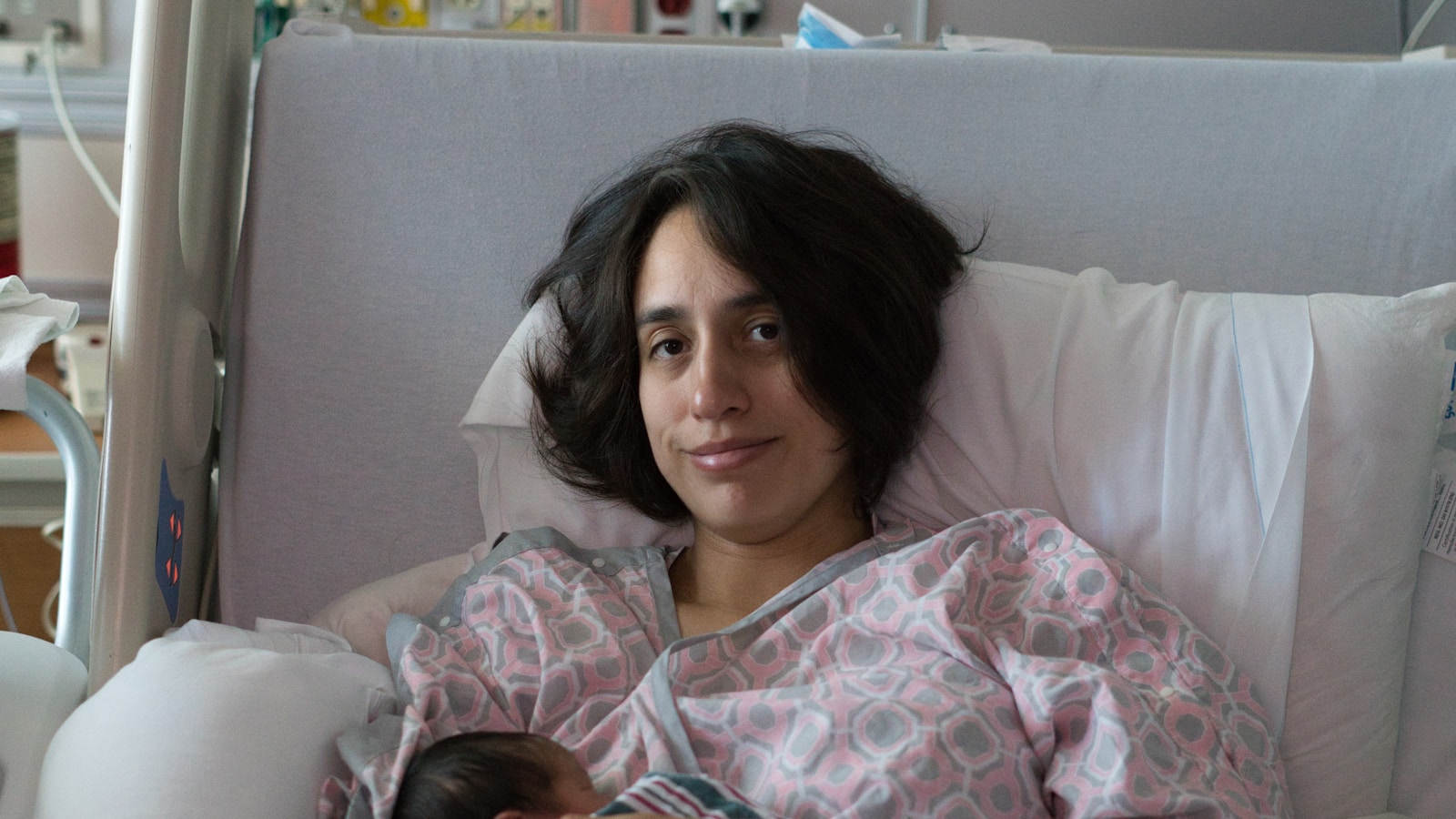
It is 3am. Something is wet. You touch the pillow. The pillow is wet. Your t-shirt is wet. The patch under your back is wet. The baby is fine, the baby is dry, you are the one swimming. Welcome to postpartum night sweats, the laundry pile nobody warned you about.
It happens to most mums, sometimes within hours of birth, sometimes starting on day 2 or 3 when your milk comes in. Some nights it is a damp t-shirt. Some nights you wake up genuinely cold because your top sheet is soaked through. Here is what is actually going on, how long this lasts, and the small bedside setup that turns it from a panic moment into a 90-second change-over.
Why your body just turned into a hot-water tap
Two things are happening at once, and both peak in the first week.
1. Hormone cliff. Estrogen and progesterone, which were sky-high in pregnancy, drop by about 90 percent in the first 72 hours after birth. Your hypothalamus, the brain region that regulates body temperature, takes a few weeks to recalibrate. The same mechanism behind menopausal hot flashes is what is happening to you now, just compressed into a few weeks instead of years.
2. Fluid offload. By the end of pregnancy you were carrying an extra 2 to 3 litres of fluid in your blood volume, your tissues, and your swollen ankles. Once the baby is out, your body needs to get rid of all of it. It does this two ways: heavy peeing for the first week (you may pee a tablespoon every twenty minutes, or a flood every two hours), and sweating, mostly at night.
Put together, this means most mums sweat the heaviest from day 2 to day 7, taper through weeks 2 and 3, and notice it has stopped without fanfare by around week 4 to 6. Some women breastfeeding long term will get small "let-down sweats" for months, but the drenched-sheets kind is usually short.
The bedside setup that saves your sanity
Trying to strip and remake a bed at 3am with a newborn is a special kind of misery. Set things up so a wet wake-up becomes a 90-second change, not a 20-minute production.
- Lay a folded bath towel under your back, on top of the bottom sheet. When you wake up wet, you pull the towel out, flip a dry one in, and the bottom sheet underneath stays mostly dry. You change one layer, not a whole bed.
- Keep two dry tops within reach. Stack them on the nightstand. A loose cotton t-shirt or a button-front nursing top works. Front-buttoning is easier than over-the-head at that hour.
- One spare pillowcase, folded. Pillows soak fast and you cannot dry the inside. A clean case slipped over a damp pillow is good enough until morning.
- A tall glass of water, already poured. Drink half before you fall back asleep. Sweating without replacing fluid is how you wake up at 6am with a headache and a milk supply dip.
- A nightlight, not the overhead. A soft warm bulb means you can change in the dark without fully waking the baby, your partner, or yourself.
What actually helps (and what does not)
The basic moves are simple. The trick is doing them every night, not just the first one.
- Cool the room. A bedroom around 24 to 25°C makes a real difference. KL ambient room temperature is 27 to 29°C, which is exactly the wrong range. Air-con on low, or a fan aimed at the foot of the bed, not at the baby.
- Layer thin, not thick. One cotton t-shirt is better than one heavy nightie, because you can peel and stack. Skip the polyester. Bamboo, cotton, or modal are kinder on sweaty skin.
- Drink more water than feels reasonable. Aim for 2.5 to 3 litres a day in the first month if you are breastfeeding. A water bottle by the bed, by the sofa, and at the nappy-change station means you actually drink it.
- Skip the heavy old-school ginger-and-sesame-oil dinner if the sweats are brutal. Ginger is warming. It has a place in confinement, but if you are already drenched at 3am, lighter meals for a few days are kinder. Save the strong tonics for after the worst of the sweats taper, usually after day 7.
- What does not help: a hot shower right before bed (which feels great and then makes the first hour worse), and "sweating it out" under thick blankets in the name of confinement tradition. The point of confinement is to recover, not to suffer. Modern centres run cool rooms, and that is fine.
The honest part: this is relentless, and it does end
If you are reading this on day 4 or 5, on the second t-shirt change of the night, knowing that "it ends by week 4" is not as comforting as it sounds. Three more weeks of wet sheets is a long stretch. So a small mercy: most mums say the worst of it is the first four nights. By the end of week 1 you are still sweating, but the bed is rarely soaked through. By week 2 it is damp, not drenched. By week 3 you stop noticing on most nights.
Run the laundry every day. Keep a stack of folded towels next to the bed. Drink the water. Tell the people around you what is happening so they stop offering you blankets at 11pm. And know that the same body that is sweating off the last of pregnancy tonight is, very quietly, also healing.