Three weeks in, the visitors have stopped showing up. The baby has just gone down for what might be 90 minutes. You're standing in the kitchen with a slightly leaking shirt, scrolling your phone, and the question that wouldn't leave the back of your head all morning finally surfaces: where do other KL mums actually go to talk about any of this?
Good news. They are already out there. They just don't always advertise.
The five flavours of KL mum-group, briefly
If you map the postpartum support landscape in the Klang Valley, it sorts into roughly five buckets:
- Feeding and lactation
- Mental health and emotional support
- Movement and class-based (yoga, baby massage, mum and bub fitness)
- Hospital and clinic-run postnatal classes
- The unglamorous WhatsApp and Telegram circles
Most mums end up using two or three of these across the first year. Not all of them, not at once. The trick is knowing where each one lives so you can reach for the right one on the right day.
Feeding and lactation: La Leche League and the IBCLCs
La Leche League Malaysia runs monthly peer-led meetups across KL and PJ. Free, low-pressure, breastfeeding-focused but not preachy. The current generation of leaders is gentler than the reputation a decade ago suggested. Find the local chapter on Facebook; meetups usually run on a weekend morning, in a community space, and your baby is welcome to scream through the whole thing.
If you want a paid one-to-one for a specific feeding problem (latch, supply, tongue-tie referral), look for an IBCLC (International Board Certified Lactation Consultant). The IBCLC credential after a name is the proper one. Sessions usually run 60 to 90 minutes, and many will come to your home in the first 6 weeks.
Most KL private hospitals also run a free or low-cost lactation drop-in for the first 4 to 6 weeks after delivery. Ask, even if you didn't deliver there. Many will let you in.
Mental health: MIASA, MMHA, and Befrienders KL
This category matters more than its quiet website tone suggests.
MIASA (Mental Illness Awareness and Support Association Malaysia) runs perinatal mental health programs and small peer support groups, sliding scale. It is the closest thing KL has to a dedicated perinatal mental health community. Groups are small, not preachy, and the facilitators have seen all the variations.
MMHA (Malaysian Mental Health Association) runs a counselling line and group therapy. Not perinatal-specific, but the counsellors have heard the postpartum version of every story.
Befrienders KL is a 24-hour listening service. Not therapy. Not advice. A person who picks up the phone at 3am when no one else is awake. Search "Befrienders KL" for the current line; it is free and confidential.
Movement and class-based: postnatal yoga, baby massage, mum and bub fitness
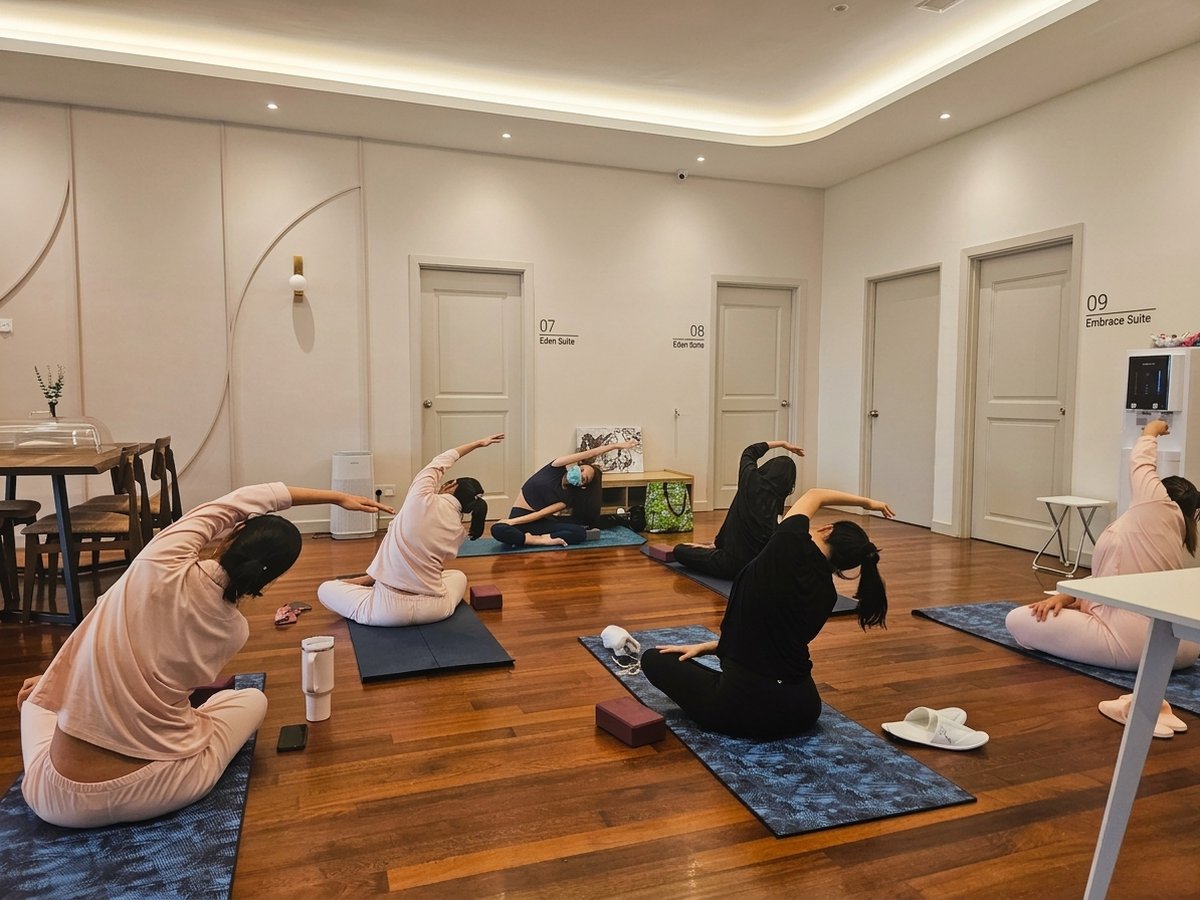
Postnatal yoga studios in Bangsar, TTDI, Mont Kiara, Bukit Damansara, and Bangsar South mostly run mum and bub classes from around week 6 (or week 8 to 10 after a C-section, with your doctor's clearance).
Baby massage workshops, usually a single 90-minute session, are a quietly excellent entry point. You learn one useful skill. You leave with five WhatsApp contacts. Nobody made you join anything you weren't ready for.
The community comes free with the class. That is half of why you go.
Hospital-based postnatal classes
Most KL private hospitals, the ones you would consider for delivery anyway, run free or low-cost postnatal classes for 4 to 6 weeks after delivery: latching clinic, newborn bath, postpartum movement, baby first aid, sometimes a parent-to-parent share.
Ask your postnatal ward what they run, even if you delivered elsewhere. Many will let you join for a small fee. Government klinik kesihatan also run sessions tied to your baby's well-baby visits, which are worth showing up to even if you have a private paediatrician.
The hidden benefit is the cohort. You keep bumping into the same six to eight mums each session. By week four, that is a real WhatsApp group. By week eight, three of them are your people.
WhatsApp and Telegram: the unglamorous ones that actually help
This is the category nobody puts on a list, and it is the one that ends up doing the most work at 2am.
Hyperlocal beats nationwide. Your condo tower's mum group. Your taman's parents WhatsApp. The little cohort of mums who delivered the same week as you at the same hospital. These are the groups that answer "is your baby also doing this purple-faced grunt thing" inside three minutes. National forums won't.
How to find them, without joining 40 random groups first:
- Ask the lactation consultant who visits your room or your home.
- Ask in your antenatal class WhatsApp; someone has already spun off a postnatal sub-group.
- Ask the security guard or management office in your tower whether there is a mum chat. They almost always know.
- Ask your paediatrician's clinic receptionist. Receptionists often run one of their own.
When a group isn't your group, that's fine
Some groups will feel like home from week one. Some will quietly stress you out. Some will gently lecture you about a choice you already made. Walk away from the ones that don't fit. There is no medal for staying in a chat that makes you feel worse.
Try two or three groups in the first six months. Keep one or two. The rest you mute, the rest you leave, no apology owed.
The mum-friend audit happens whether you do it on purpose or not. May as well do it on purpose.