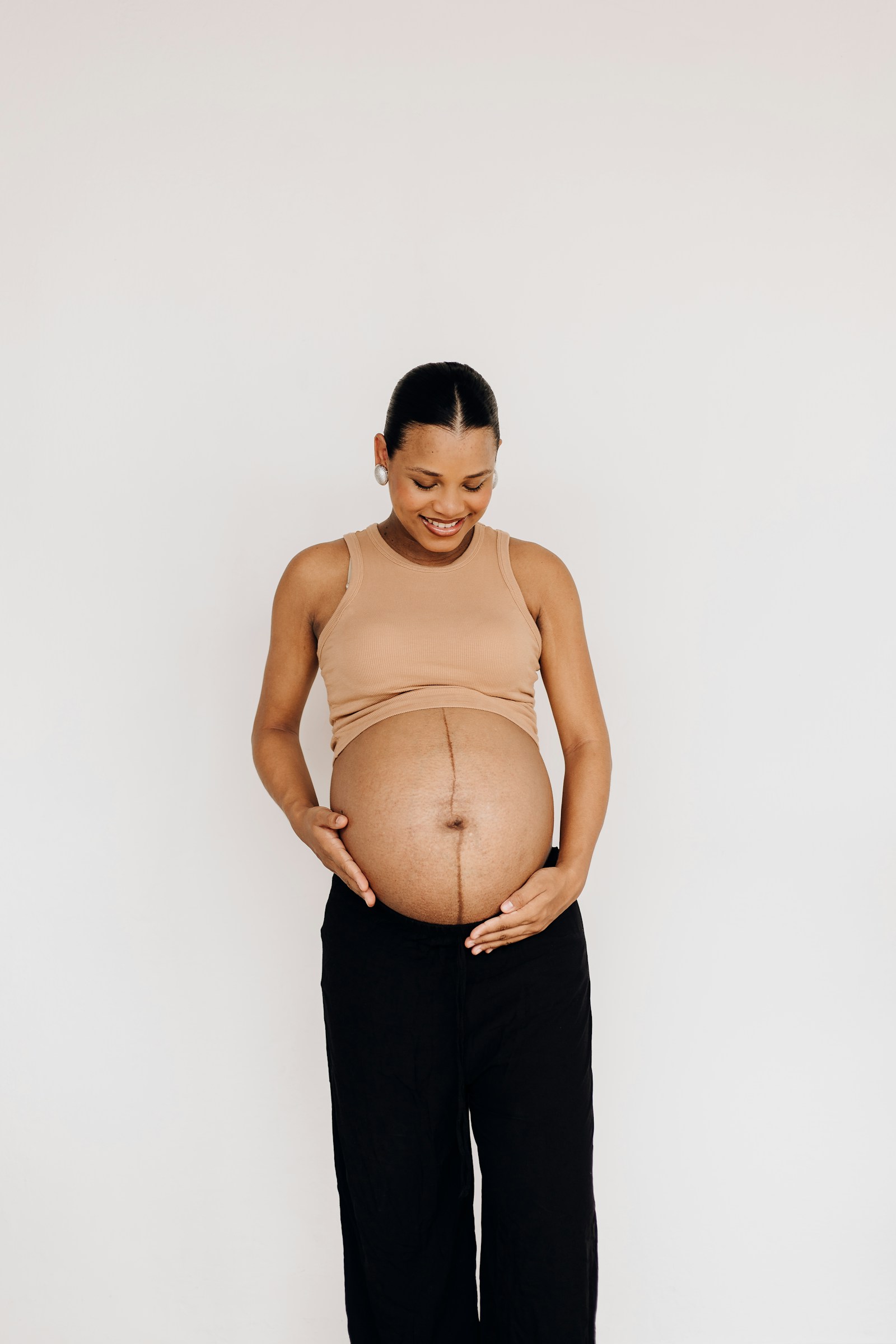
It is 9pm. You are on the sofa, hand on your belly, eyes on the clock. Was that a kick or did the cat brush past? You sit very still. You count to sixty. Nothing. You count to sixty again. Then a tiny, polite roll, like the baby just turned a page. You exhale.
Welcome to kick counting. The most useful, most pointlessly stressful, and least well-explained part of the third trimester. Here is how to do it without becoming the person who reaches for the doppler every ninety minutes.
When do you actually start counting?
Most KL OBs will tell you to start paying attention from around 28 weeks. Some say 26, some say 30, the difference is small. Before 28 weeks, movements are real but they are too random and too easily missed for a count to be meaningful. After 28 weeks, your baby's sleep and wake cycles settle into something you can almost predict: a busy hour after you eat, a quiet hour after you walk, a strong burst around 9pm when you finally sit down.
By 32 weeks the pattern is properly yours to learn. By 36 weeks you will know what an average evening feels like, what a quiet day feels like, and what "something is different" feels like. That last sense, the one you cannot quite explain, is the one that matters most.
The simple method (the only one you need)
You will read about "count to 10" and "Cardiff method" and apps that tally swipes. The underlying rule is the same. You are looking for ten distinct movements within a window that is normal for your baby.
Here is how to do it once a day, usually after your biggest meal or in the evening when your baby is busiest:
- Pick a time of day your baby is usually active. Same time, every day. Around 8 or 9pm works for most mums.
- Empty your bladder, then lie on your left side. Left side gives the placenta better blood flow and you will feel movements more clearly.
- Put a hand on your belly. Phone face-down or out of reach. The app counts when you tap, not when the baby moves, so be honest with yourself.
- Count distinct movements. A kick, a roll, a jab, a stretch, a hiccup-sized flutter, all count as one. A long roll that turns into a stretch still counts as one. A burst of three quick kicks counts as three.
- Stop when you reach ten. Note the time. Most days you will hit ten in 10 to 30 minutes.
That is the whole technique. Boring. Effective. The point is not the number 10. The point is that after a week of doing this, you will know what 10 movements looks like for your baby, and your gut will start flagging the days that feel off before your brain does.
The myths that quietly stress you out
A few things you will hear that are not quite right.
"Babies move less near the end." The character of movements changes, the count does not. By 38 weeks your baby is packed in tighter, so kicks feel like rolls and pokes instead of the big punts from 30 weeks. You should still feel ten movements in your usual window. If you do not, that is not a "winding down for labour" sign. That is a "call the ward" sign.
"Drink something cold and they always wake up." Sometimes, yes. Often, no. Sugar and cold water can nudge a sleepy baby, but using this as your only test is risky. If a baby is genuinely in trouble, they may not respond to a glass of teh ais. Use the count, not the trick.
"My doctor said kicks are not reliable." What is unreliable is one mum's "10 a day" compared with another's. What is reliable is a real change from your baby's own pattern. The Lancet's MiNESS study (2017) was clear: a meaningful drop in movements is one of the strongest signals of a baby in distress that we have without a scan.
"I have an anterior placenta, so I cannot feel anything." An anterior placenta cushions movements, especially in the second trimester. By 28 to 30 weeks most mums with anterior placentas can still feel the count. The pattern may just be quieter overall. Tell your OB so they can adjust expectations and book extra growth scans if needed.
When to call the labour ward (not wait, not Google)
Call your hospital's labour ward, not the clinic and not WhatsApp, the same day, if any of these is true:
- You cannot get to ten movements in two hours during your usual active window, lying on your left side, properly paying attention.
- The pattern is clearly different from your baby's usual: much quieter than normal, or a sudden burst of frantic activity that has not settled.
- You have a gut feeling something is off, even if the count is technically fine.
They will ask you to come in and put you on a CTG (the strap that monitors baby's heart rate and movement) for 20 to 40 minutes. Most of the time, baby will be having a sleepy day and you will go home with a printout and some embarrassment. That trade is worth it. Do not let embarrassment about being "that mum" stop you. Labour ward nurses would rather see you ten times for nothing than miss you once for something.
The honest part
The apps will stress you out more than your baby will. The good ones are fine for a quick log. The chatty ones, the ones that show you graphs and trends and a daily score, can quietly turn a healthy pregnancy into a low-grade panic. Pick one. Use it for two minutes a day. Close it.
And do not count more than once or twice a day. The point of kick counting is not maximum surveillance. It is a daily check-in, the same way you would notice your toddler has been quiet for a worryingly long time. One good session, same time every day, run by you and not by the app, is more useful than six anxious half-counts spread across the afternoon.
The most important sentence in this whole piece is the one we said earlier: you cannot over-call about reduced movements. If something feels off, go in.