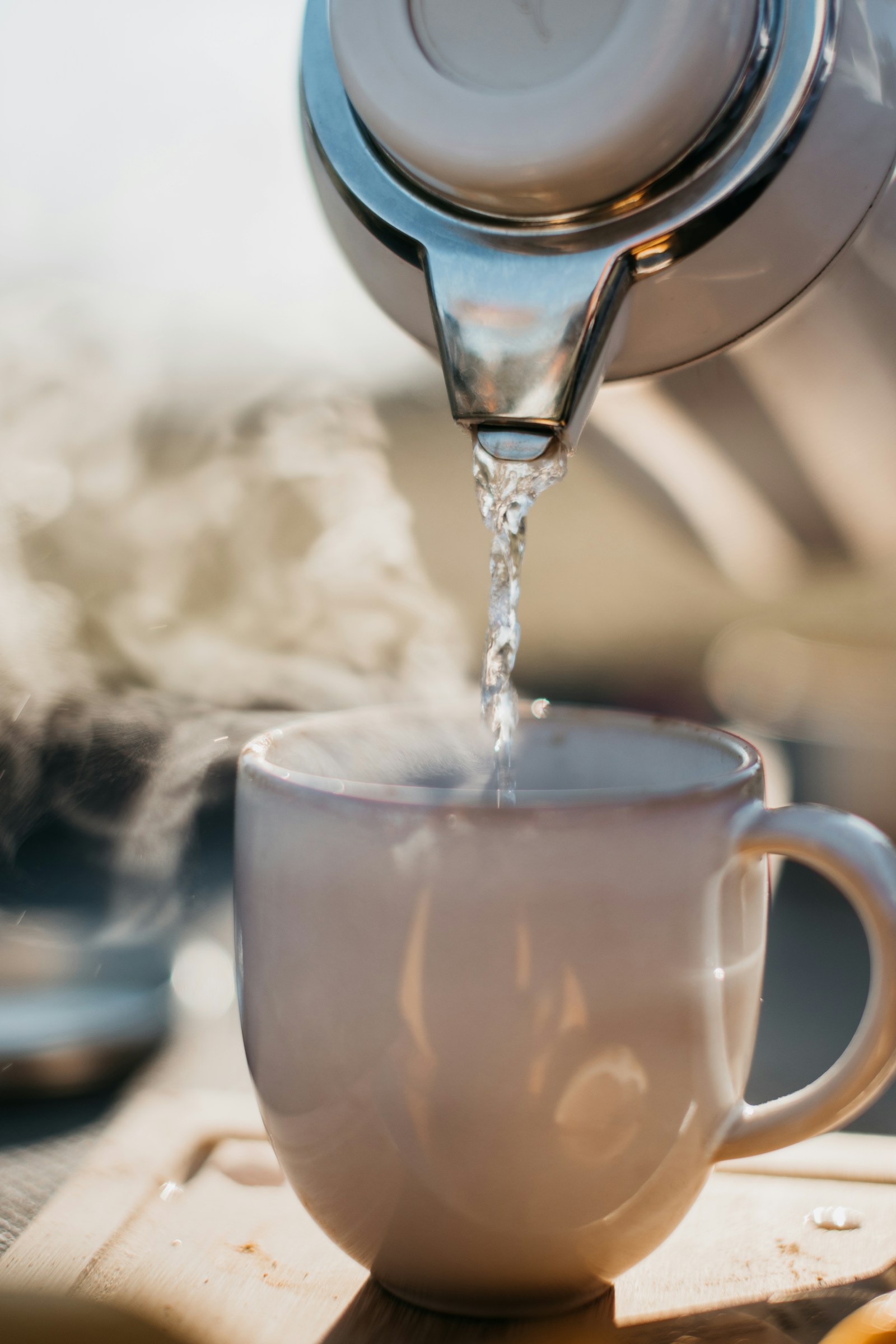
Your mother-in-law sees you reach for the water bottle and her eyebrows go up. "No water," she says, kindly but firmly. You blink. You just gave birth. You are breastfeeding a small mammal every two hours. You are sweating through three shirts a night. And you have just been informed that water is the enemy. Take a breath. This argument is older than your marriage, and it is more settle-able than it sounds.
Short answer: yes, you can drink during 月子. The rule was never really "no water". It was "no cold drinks, please prefer fluids that warm you up". Once you separate those two, the next 28 days get a lot easier.
Where the rule actually comes from
In TCM, postpartum is a 寒 (cold) state. You have lost blood. Your pores are open. Your digestion is fragile. The qi is weak. Pouring something cold into that system is thought to "let the cold in" (寒气入侵), which the next decade of joint aches and period pains is then blamed on. Whether you fully buy the framework or not, the prescription that came out of it was specific: warm fluids only, warming ingredients where possible. Plain cold tap water sits at the wrong end of that scale. Plain warm water does not.
Somewhere along the way, the nuance got squashed into "no water". That is the version your great-aunt repeats. That is the version causing the standoff at the kitchen counter. The original rule was a lot kinder.
What your body is actually asking for
Your body has a list, and the top of the list is: replace the fluid you are losing. Postpartum, you are losing more than you think. Lochia (the bleeding after birth) takes some of it. Night sweats take a surprising chunk; for the first two weeks you will wake up damp two or three times a night while your hormones flush extra fluid out. And if you are breastfeeding, you are exporting about 700ml of fluid a day in milk alone. That is three large glasses gone before lunch.
Add it up and a breastfeeding 月子 mama needs roughly 2.5 to 3 litres of total fluid a day. Not "drinks". Total fluid intake, including soups and teas. That is more than you drank while pregnant, and noticeably more than your pre-baby baseline.
Under-drink for three days and your supply visibly drops. Under-drink for a week and the headaches start. The "I keep feeling slightly off" of weeks one and two is, more often than mums admit out loud, mild dehydration.
Hot, warm, room temperature, ice: this is the only axis that matters
The TCM argument is about temperature, not water itself. Sort your drinks by temperature, not by ingredient, and the rule clicks into place:
- Hot or warm (just-boiled, cooled to drinkable): the home zone. Drink this freely.
- Room temperature: fine for most mums, especially in KL where "room temperature" is about 28°C and not cold at all.
- Fridge-cold: this is the one tradition is pushing back on. Skip it for 28 days.
- Ice in the drink: skip the full month. Yes, even on a hot day. Yes, even at the food court.
If you remember nothing else from this article: anything that does not make your hand cold to hold is fine. Anything that does is the part the rule was originally for.
The confinement drinks list, ranked
A sensible 月子 day, roughly in order of how often each shows up:
- Warm boiled water. The base layer. Keep a thermos by the bed. Refill it twice a day. This is the unsung hero of the whole month.
- Red date tea (红枣茶). Sweet, warming, full of iron-friendly compounds. Two to three cups a day is the going rate. Most centres serve it as the default drink at meals.
- Longan and ginger tea, or longan and red date. Gentler than ginger water on its own. Good in the afternoon when energy dips.
- The broth from your meals. Soups are not separate from your fluid count, they are part of it. A bowl of papaya fish soup is about 400ml of warming, mineral-rich fluid.
- DOM or rice wine soups. Traditional and warming, but typically after week two and not in the same hour as a breastfeed. Check the timing with your confinement nanny.
- Plain tea (普洱 / 黑茶). Fine in small amounts, but the caffeine hits harder than you remember. Cap it at one cup, mornings.
- Coffee. Most centres ask you to wait until after the 28 days. One small white coffee around week three or four does not break the month.
A working confinement day, by the glass
One way to hit 2.5 to 3 litres without thinking about it:
- On waking: one cup warm water (200ml).
- Breakfast: one cup red date tea (200ml) plus the soup with your breakfast (300ml).
- Mid-morning: warm water from the thermos, sipped (300ml).
- Lunch: soup of the day (400ml) plus a cup of warm water (200ml).
- Mid-afternoon: longan tea (200ml).
- Pre-nap or during a feed: warm water (300ml). A feeding mama drinks every time baby drinks.
- Dinner: soup (400ml) plus warm water (200ml).
- Before bed: small cup of warm water (150ml).
That lands around 2.85 litres without any one cup feeling like a chore. The trick is the thermos by the bed: every time you sit down to feed, you sip. Babies make excellent hydration timers if you let them.
The honest part, where mums and elders genuinely disagree
The strict camp says no plain water at all for 28 days, only boiled-with-herbs water (生化汤 in the first week, then warming teas after). The relaxed camp says plain warm water whenever you are thirsty, herbal teas as bonus.
Most modern KL mums land in the middle. Plain warm boiled water as the base, herbal teas around meals, soups as a meaningful part of total fluid, no fridge-cold anything. Your supply, your sweat, and your urine colour will tell you within three days whether you are on the right number. Trust those signals over the loudest voice in the family group chat.
If you have an existing iron deficiency, high blood pressure, gestational diabetes that has not yet resolved, or you are recovering from a C-section with extra blood loss, your fluid picture may look different. Your obstetrician knows your case; bring it up at the two-week check-in.
This is information, not medical advice. Your doctor knows your case. Persistent dizziness, fainting, very dark urine, or a sudden milk-supply crash that water and rest do not fix in 24 hours is a same-day call to your OB or midwife.