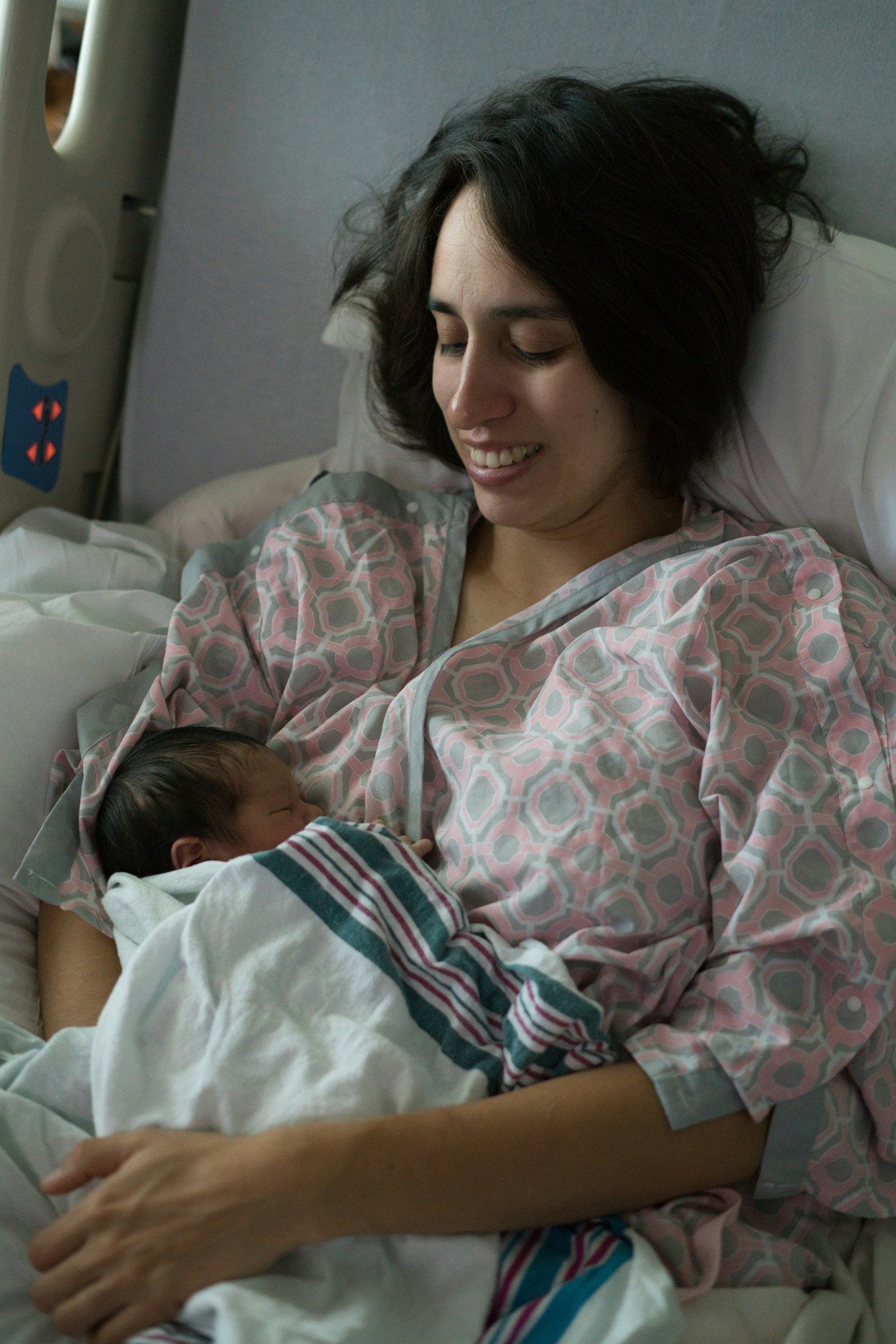
It is 4am, you are halfway out of bed, your abdomen tells you exactly where the line is, and you remember the C-section was pitched as "the easy one." A C-section is major abdominal surgery, and the skin you see in the mirror is only one of seven layers that got cut. Each one heals at its own pace, and knowing the schedule is half the recovery.
This is the rough timeline most KL mums move through, from the hospital bed to the 6-month mark. Bodies vary, your doctor knows your case, but the shape of the recovery is the same.
What actually happened in there
The cut goes through, in order: skin, fat, fascia (the sheet of tough tissue that holds your abdominals together), abdominal muscle (separated, not cut, in most cases), peritoneum (the lining of your abdominal cavity), uterine wall, and amniotic sac. Seven layers. Each one needs to heal.
Your skin closes in about 6 to 8 weeks. The fascia, which is what actually holds your core together, takes 3 to 6 months. The internal sutures dissolve over the same window. Which is why "I feel fine at week 4" is a different sentence from "my body is healed at week 4." The first is true. The second is not yet.
Week 1: hospital, then the first 48 at home
Day 0 to day 2 is mostly hospital. The catheter comes out on day 1. They will ask you to stand and take a few steps before they will discharge you, and yes, that first stand is awful. Shuffle, do not bend at the waist, hold a folded towel firmly against the wound when you cough, sneeze, or laugh. The towel stops the pain spike and quietly protects the stitches.
Day 3 to day 5 at home is the toughest stretch. Your pain meds (usually paracetamol plus a short course of something stronger from your OB) actually work; take them on schedule, not "when it gets bad." Painkillers chasing pain is a losing game.
Sleep propped up on three pillows for the first week. Lying flat puts pressure on the wound and makes getting up a one-person CrossFit event. Side-sleeping comes back around day 5 to 7. Hug a pillow against your stomach when you turn.
Eat small and often, drink water like it is your job, and walk. Not walk-the-dog walk. A slow loop around the bedroom every two to three hours during the day. It clears the anaesthesia faster, drops your clot risk, and gets your bowels moving (the first poo after a C-section deserves its own moment, and yes, you will have one).
Weeks 2 to 3: walking better, sleeping worse
The wound stops being the loudest thing in the room. The scar starts to knit; you will see it go from raised and pink to flatter and pinker over the next two weeks. A bit of clear or pale-yellow fluid from the very corners is normal. Pus, foul smell, or redness spreading outward is not.
The lifting limit stays the same: nothing heavier than your baby. Roughly 3 to 4 kg. It is harder than it sounds. The dog, the laundry basket, the overpacked diaper bag all weigh more.
Lochia (the bleeding after birth) is still there. It is usually a bit less after a section than a vaginal birth, but it does not skip you. Heavy bleeding that soaks a pad in under an hour, or passing clots bigger than a 50 sen coin, is a same-day call.
Driving comes back when you can do a full emergency stop without flinching. Most KL mums hit that around week 4 to 6. Test it in an empty supermarket car park before you take baby anywhere.
Weeks 4 to 6: the 6-week check-up
By week 4, you should be moving around the house easily and managing short outings. The scar is still tender to direct touch, especially at the two ends; that is normal and fades over months 2 to 4.
At the 6-week check-up, your OB will look at the scar, check that your uterus is shrinking on schedule, and clear you for "light exercise" if everything is healing. Take "light" literally. Walking, stretching, gentle pelvic floor work. Not sit-ups, not planks, not running, not hot yoga, not lifting anything heavier than your now slightly chubbier baby.
Push hard movements too early and you risk a hernia at the fascia line, or a slow heal turning into a chronic ache. The fascia is the part holding your core together; it is not done.
Months 2 to 6: the part nobody mentions
The scar is the easy part. The harder part is your core. Your abdominal muscles were separated, your fascia stretched, your nerves cut at the skin. The numb patch above and below the scar can last 6 to 12 months. Some of it stays numb forever; that is normal and not dangerous.
Diastasis recti (the gap between your abs) is common after a C-section too. Check it at month 3: lie on your back, knees bent, lift your head slightly, fingers across your belly button. A gap of one to two fingers is normal at this stage. Three or more, ask your OB for a women's-health physio referral. It is fixable, but not with sit-ups. Sit-ups will make it worse.
Postnatal physio at month 2 to 3 is the most under-used investment in your recovery. One or two sessions covering breath, pelvic floor, and a graded return to core work saves months of "why is my back still sore?"
The honest part
The C-section recovery comes with a layer the vaginal birth one does not always: a quiet feeling that you missed something. That you did not "really" give birth. This is louder if your section was unplanned, and louder still if it came after a long labour.
It is not true. You did. The route was different, the recovery is harder in the first two weeks, the scar is permanent. None of that subtracts from the birth.
If the feeling is still loud at the 6-week check-up, mention it then. Postnatal anxiety and birth-related processing both respond well to early help, and "I had a C-section and I am not sure how I feel about it" is a complete sentence to bring to a doctor.
This is information, not medical advice. Your doctor knows your case. If anything on the red-flag list appears, get checked the same day.