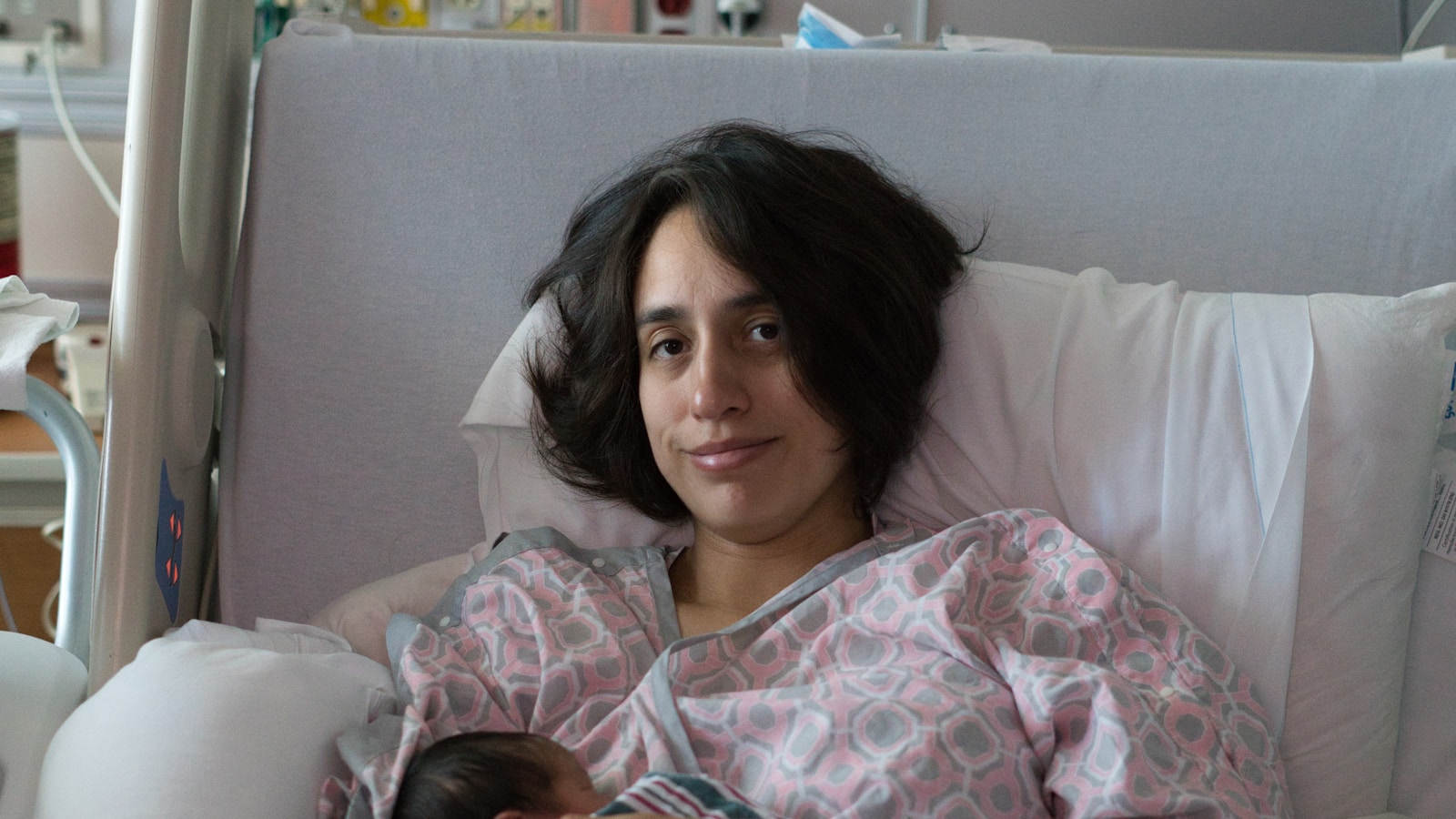
Nobody at the antenatal class said anything about the first pee. They walked you through breathing patterns, contractions, what an epidural feels like, when to push. Nobody said: at some point in the next 12 hours you will need to walk to a toilet, sit down on a body that does not feel like yours, and convince it to do something it used to do without thinking. And it will sting like a Sunday-night curry on day-two leftovers.
The squirt bottle is the answer. Peri bottle, in clinical speak. Plastic, cheap, ridiculous looking. It is the single most useful thing in a postpartum bathroom kit, and most KL mums find out about it from a nurse who hands them one with a smile that says "trust me on this." So: trust her on this.
What actually happens down there in the first week
Whether you had a small graze, a Grade 1 or 2 tear, or an episiotomy, the perineum (the bit between vagina and back passage) has been stretched, often torn, sometimes cut. It will be swollen for the first few days, then bruised-looking, then just tender. Stitches, if you have them, are usually dissolvable. They drop off on their own between week 4 and week 6. You do not go back to have them removed. You also do not need to count them.
The soreness curve looks roughly like this. Day 1: numb and woozy, mostly from the meds and the adrenaline still in your system. Day 2 to 4: the actual peak. This is when sitting hurts, walking is a waddle, and the cushion becomes your closest friend. Day 5 to 10: easing. Week 2: you stop wincing every time you sit. Week 3 to 4: mostly fine, twinges only if you overdo it. Week 6: stitches done, tissue mostly healed. Some mums take longer, especially with a Grade 3 or 4 tear. That is not failure, it is just a different timeline.
The squirt bottle, used right
This is the routine that takes the dread out of the first week. The whole thing adds maybe 30 seconds to a normal toilet trip.
- Before you go to the toilet, fill the peri bottle with warm water from the tap. Not hot, not cold. The temperature you would happily wash a baby's hands in.
- Sit normally. Aim the bottle so the spray hits the perineum from front to back, not back to front (you do not want to drag anything bacterial forward).
- Squirt while you pee. The water dilutes the urine on the way out so it does not sting the broken skin. You can squirt before, during, and after if you want. Most mums squirt during and after.
- Pat dry with toilet paper or a soft pad, front to back. Do not rub. The skin is fragile.
- Change your pad every two to three hours in the first few days, even if it does not feel full. Damp is the enemy of healing.
For the first poo (different article, but the principle is similar), hold a clean pad pressed gently against the stitches while you go. The counter-pressure stops the pull. It feels strange. It works.
The three-item kit you actually need
Forget the 47-product postpartum bundles on Shopee. Here is the short list.
- Peri bottle. The hospital will give you one. Bring it home, refill it, use it for the full first week minimum. Many mums use one for two weeks.
- Witch-hazel pads or a soft cold cushion. Tucks pads (witch hazel) are the classic; if you cannot find them locally, ice wrapped in a thin clean cloth for 10 minutes at a time, 3 to 4 times a day for the first 48 hours, takes down the swelling and is the single biggest comfort upgrade.
- Soft maternity maxi pads. Long, thick, unscented. The lined-with-cotton kind, not the plastic-mesh ones, which catch on stitches.
Optional but lovely: a doughnut cushion for sitting on the couch, a numbing spray (lignocaine-based, from a pharmacy, ask first if you are breastfeeding) for the first 48 hours, and a slow stool softener if your gynae has approved one. Skip the postpartum underwear with the seam at the perineum. You want loose cotton, full coverage, nothing biting.
A simple sitz bath, the modern version
From day 2 or 3, once any heavy bleeding has slowed, a warm sitz bath can be very soothing. Five to ten minutes of warm water over the perineum, once or twice a day. You can buy a plastic sitz tub that sits on the toilet rim, or use a clean shallow basin, or sit in a few inches of warm water in a clean bathtub. Plain warm water already does most of the work. Some mums add a small handful of Epsom salt (magnesium sulphate) for the soak feeling and find it softens the day-2-to-4 ache; plain or salted, both are reasonable. Skip the essential oils. The aim is gentle warmth, not antiseptics.
Pat dry afterwards. Air-dry for a few minutes if you have the privacy and the patience. Skin heals faster dry.
When to call someone, not Google
Everything else (pulling, twinging, mild itching as things heal, a "tight" feeling around week 3) is usually normal. The body is rebuilding a layered piece of tissue from the inside out and it does that on its own timeline, not yours.
The honest part
Sex, exercise, and the question of "am I going to feel normal again" all sit in the back of most mums' heads in week one, and nobody is brave enough to ask out loud. So: most mums feel mostly normal by week 6, fully normal by month 3, and a few notice mild tightness or sensitivity for longer. If something still feels off at your 6-week check-up, say so. Pelvic floor physiotherapy is not vanity work, it is the most underused service in Malaysian postnatal care, and it sorts out the long-tail issues quickly. Ask your gynae for a referral if anything is still bothering you. You do not have to wait until something is "bad enough."
And quietly, on the way home: the peri bottle is coming with you. Pack it. It is the cheapest piece of self-care in your bag.