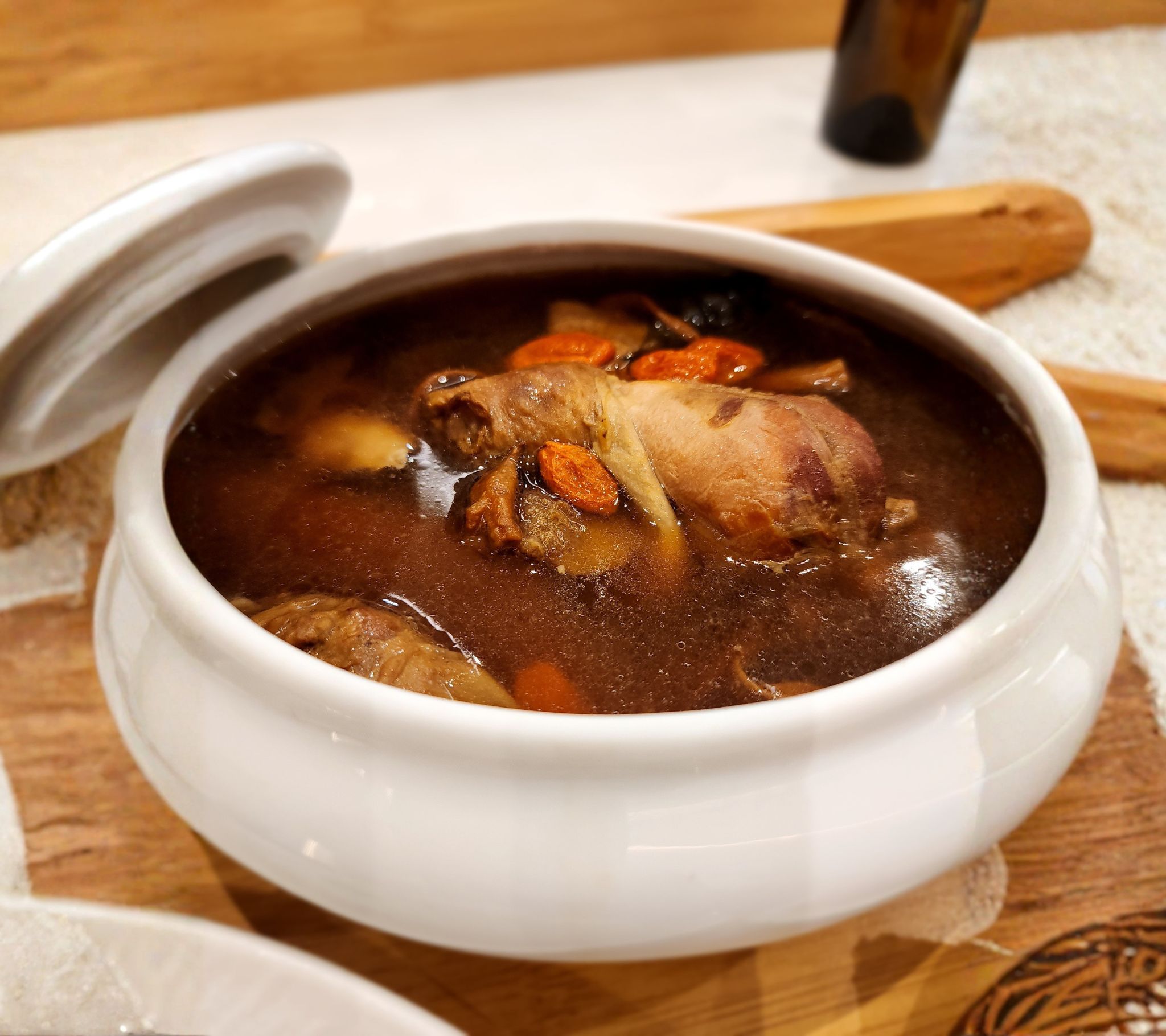
Lift the lid on any confinement soup and you meet a small parliament of dried things: wrinkled red beads, pale woody slices, something that looks like a twig and something else that looks like a raisin's tougher cousin. Your mother knows every name by heart. You, holding the bowl, know exactly none of them.
Here is the decode. Not the mystical version, and not the dismissive one either. Just what is actually in there, what each piece is traditionally for, and where modern nutrition nods along versus raises an eyebrow.
The sweet ones: red dates, goji, longan
These three are the sugar and the romance of the bowl, the reason a tonic soup tastes like dessert that wandered into dinner.
红枣 (red dates, jujube) are the headline act. In traditional terms they "build blood" (补血) and warm the middle. In plain terms they are dried fruit with a genuine hit of iron and natural sugar, which is not nothing when birth has just cost you around 500ml of blood. Four to six per pot is the usual hand.
枸杞 (goji berries, wolfberries) are the little orange-red ones tipped in near the end so they do not turn to mush. Tradition says they "brighten the eyes" and support the liver and kidney. Modern reading: a small, antioxidant-rich dried fruit. Pleasant, harmless, mildly nutritious.
桂圆 (dried longan) is the dark, chewy one. Warming, traditionally linked to better sleep and "nourishing the heart and blood." Treat it as a sweet, warming raisin. Lovely in moderation, and the reason some tonic soups taste almost like a drink.
The blood movers: dong quai, chuanxiong, motherwort
This is the working end of the herb drawer, the group with real pharmacological activity, and the group worth a sentence to your doctor.
当归 (dong quai, angelica root) is the famous one, sometimes called "female ginseng." It is the classic blood tonic, credited with everything from circulation to mood. It also has a mild blood-thinning effect, which is exactly why many confinement cooks hold it back in the first few days while bleeding is heaviest, then bring it in from around week 2 as the lochia settles.
川芎 (chuanxiong, ligusticum) usually travels with dong quai. It is the circulation partner, traditionally moving blood and "unblocking." You will rarely see it solo, more often as the quiet second name in a two-herb pairing.
益母草 (motherwort) wears its purpose in its name: the "benefit-mother herb." It is traditionally given to help the uterus contract back to size and clear lochia in the early weeks. This one is genuinely active on the uterus, so it belongs in the "ask first" column rather than the "scatter freely" one.
The qi and back builders: astragalus, codonopsis, eucommia
If the sweet group is comfort and the blood group is repair, this group is about putting your energy back.
黄芪 (astragalus, huang qi) is the energy-and-immunity herb, the pale tongue-depressor slices. Traditionally it "tonifies qi" and is reached for when you feel wrung out and depleted, which after a few weeks of broken sleep is most people.
党参 (codonopsis, dang shen) is the gentle understudy to true ginseng (人参). It does a similar qi-building job without the heat and the racing heart that real ginseng can bring on, which is why confinement kitchens lean on it instead during breastfeeding.
杜仲 (eucommia bark) is the back-and-kidney herb. Confinement lore holds that birth depletes "kidney" reserves and leaves the lower back vulnerable, so eucommia shows up in the later, nourishing weeks (滋补, 巩固) aimed squarely at the postpartum backache.
The base note: old ginger and sesame oil
Not technically tonic herbs, but they are the flavour spine of the whole month. 老姜 (old ginger) brings the warmth and has real anti-nausea credentials. 麻油 (sesame oil) is good fat and the calories you actually need right now. Add a splash of 米酒 (rice wine) and you have 麻油鸡, the dish that simply tastes like confinement. If you are breastfeeding and uneasy about the wine, ask for it left out or fully simmered down; most of the alcohol cooks off either way.
The honest part
Here is the thing the recipe cards do not say out loud: the herbs are the garnish, and the broth is the medicine. The warmth, the rest, the 2 to 2.5 litres of fluid a day arriving as soup instead of cold water, and the steady protein in the chicken or fish, that is the part doing the heavy lifting on your recovery.
Most of the herbs are mild, and the soups will not "detox" you; your liver and kidneys handled that before the kitchen got involved. The two or three genuinely active herbs deserve respect rather than fear. And there is a real, unmeasurable benefit in being handed a warm bowl that someone made on purpose, for you, because you just did something enormous.
So enjoy the red dates, sip the longan, and let the ginger do its warming work. Keep the genuinely active herbs in conversation with someone who knows your history, and let the rest of the bowl be exactly what it has always quietly been: care you can taste.